Role of Waste Management Audits in Improving Operational Efficiency

There are everyday waste management issues that many industries quietly face. This includes overflowing bins, poor segregation, material losses, inefficient collection, compliance pressure, and more. When waste builds up unnoticed, it slows operations, increases handling time, and raises costs. Tracking these waste flows through an audit helps prevent inefficiencies from spreading across departments. Here, the first step you can take is to take the help of a waste management audit.
It systematically measures and analyzes the types, volumes, and sources of waste an organization produces. It reveals hidden inefficiencies in waste handling, disposal, and recycling practices.
With granular data on waste streams, companies can make better decisions. But how? Well, they can choose the right‑size collection schedules, optimize bin placement, reduce unnecessary disposal costs, and even uncover recyclable materials mistakenly sent to landfill. Let’s read in detail how an audit of waste management helps in streamlining workflows, supports broader sustainability strategies, and trims costs!
Operational Control Through Waste Auditing – OverviewA waste management audit analyzes waste streams, material usage, and disposal records to uncover operational inefficiencies and cost drivers. It identifies process losses, overproduction, poor segregation practices, and compliance gaps that affect performance. By reviewing internal waste flow, contractor practices, storage conditions, and documentation accuracy, organizations can streamline handling processes, reduce avoidable expenses, improve regulatory readiness, and establish clearer departmental accountability supported by measurable data insights. |
What is the Process of Waste Management Audits?
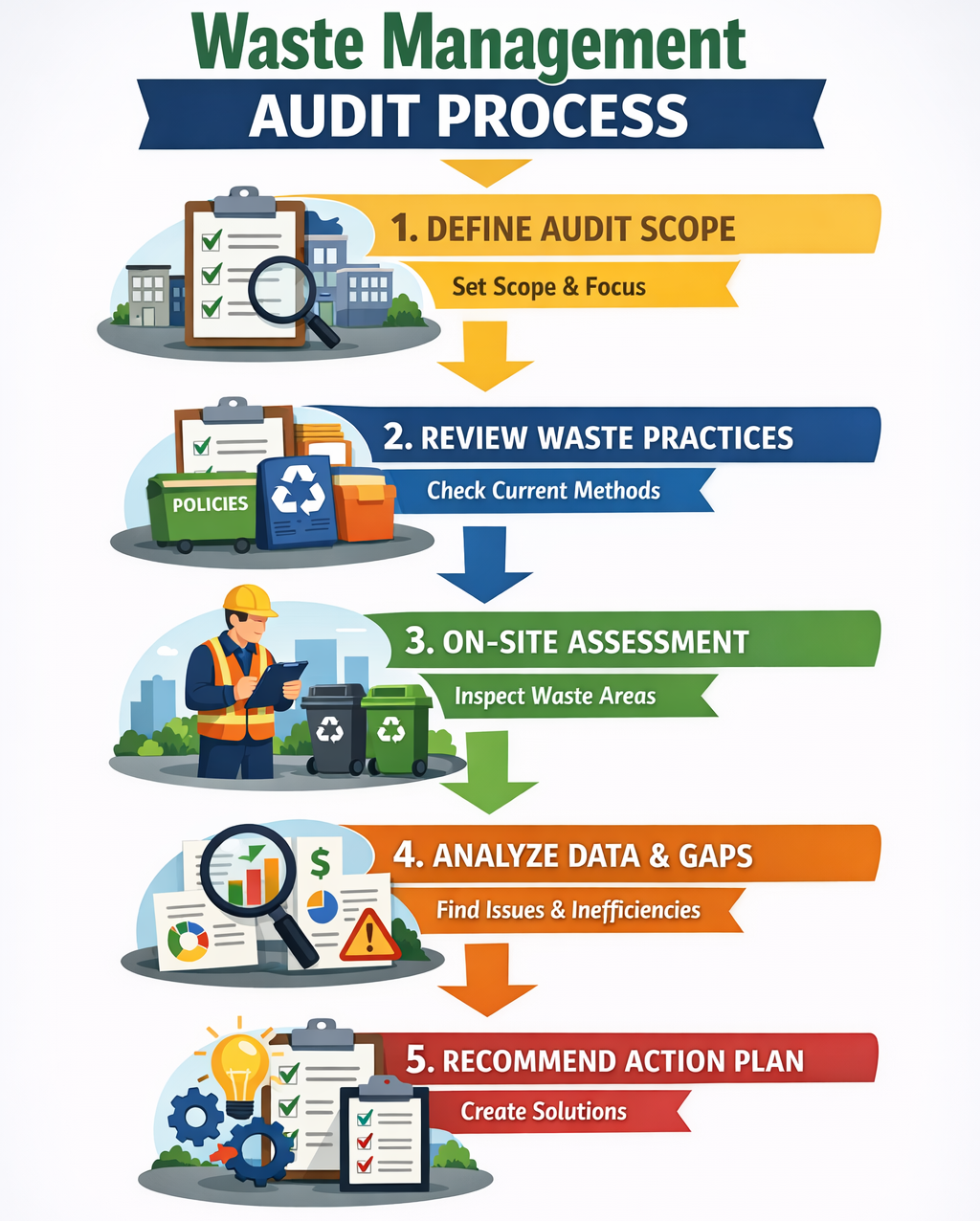
Below is a step-by-step visual breakdown of the waste management audit process, from initial assessment to the end:
Why Waste Audits Are Essential for Operational Efficiency?
Shows exactly where waste is produced
A waste management audit begins with a detailed waste assessment that examines each stage of your process. It includes material handling, storage, production, and disposal. It identifies precise points where resources are being lost.
For example, the audit may uncover
- excess raw material discarded during handling,
- poorly calibrated machines generating avoidable scrap, or
- Specific departments produce higher packaging waste.
This can help you address the root cause instead of making temporary or unfocused changes.
Reduces material loss
According to the Australian Government’s National Waste and Resource Recovery Report 2022–23, Australia recovered about 66% of its total waste. It means nearly one-third of materials still ended up as waste instead of being reused or recycled.
To help you prevent this kind of loss in your own operations, a waste management audit helps. How?
- It compares what you buy to what becomes a finished product.
- It examines storage facilities, manufacturing methods, and methods of handling to identify what is being wasted, misused, or damaged.
Let’s understand it with an example: in a factory, the audit might reveal that too much raw material is being ordered and then discarded before production because it expires or degrades in storage. Or it could show that certain cutting processes produce excessive offcuts and rejects. Knowing this lets you improve ordering, storage, or production methods so less usable material is wasted.
Lowers handling and disposal time
Time is often lost in the way waste is collected, moved, and discarded. When bins are poorly placed or waste is not properly segregated, employees spend extra time handling the same materials more than once. This slows down daily operations and increases labor effort.
Thinking about what the waste management audit role is here? Well it:
- Reviews waste flow inside your facility.
- looks at bin placement, collection frequency, internal transport routes, and sorting practices to identify unnecessary movement or delays.
Improves Compliance Readiness
Answer these questions with yes/no for yourself:
- Have you ensured that hazardous and non-hazardous waste are properly segregated in your facility?
- Have you verified that all waste containers are clearly labeled and stored according to regulations?
- Are your disposal records, transport manifests, and waste transfer documents complete and up to date?
- Have you checked that your waste contractors hold valid licenses and approvals?
If any answer is “no” or even “not sure,” there is a compliance gap. A waste management audit reviews each of these areas in detail. It identifies what is missing and helps you correct it before it becomes a regulatory issue.
In addition, technological advancements in recycling make compliance easier. Digital waste tracking systems, automated documentation, and barcode-based monitoring ensure accurate reporting and regulatory transparency.
Strengthens Internal Accountability Across Departments
One common problem in organizations is that no department clearly owns the waste problem. Everyone assumes someone else is responsible. Waste increases. But accountability remains unclear.
For example, in a manufacturing facility, packaging waste may be unusually high. Production staff may believe procurement ordered excessive materials. Procurement may argue that they followed forecast estimates. Meanwhile, the warehouse team discards damaged cartons caused by improper storage. No department sees the full picture.
Here, the waste management audit role becomes crucial at this stage, as it identifies where waste is generated and assigns responsibility to the relevant departments.
A waste management solution breaks this cycle. It measures packaging waste by department and links losses to specific operational activities. This clarity establishes accountability and enables targeted, coordinated improvements.
Standard Checklist for Waste Management Audits
A structured waste assessment forms the foundation of this checklist, ensuring all waste streams, processes, and inefficiencies are accurately identified before taking corrective action.
- Catalogue Different Types of Waste: Accurately record all different types of waste generated in your facility as a way of starting point for specific invention analysis and planning.
- Measure and Control Waste Volume: Consistently record the volume of waste produced across departments. Having reliable information regarding waste production will help you to identify and control inefficient waste production processes and/or rising costs of disposal.
- Evaluate Waste Separation Processes: Make sure recyclable products/residuals, potentially harmful products/residuals, and general products/residuals are separated when generated. Proper modular waste disposal (i.e., recycling materials) reduces contamination in recyclable products; this process increases the recycling rate.
- Confirm Regulatory Compliance: Verify that permits, documentation, and disposal procedures follow the law. If they do not, your company is subject to fines and violations of operational risk.
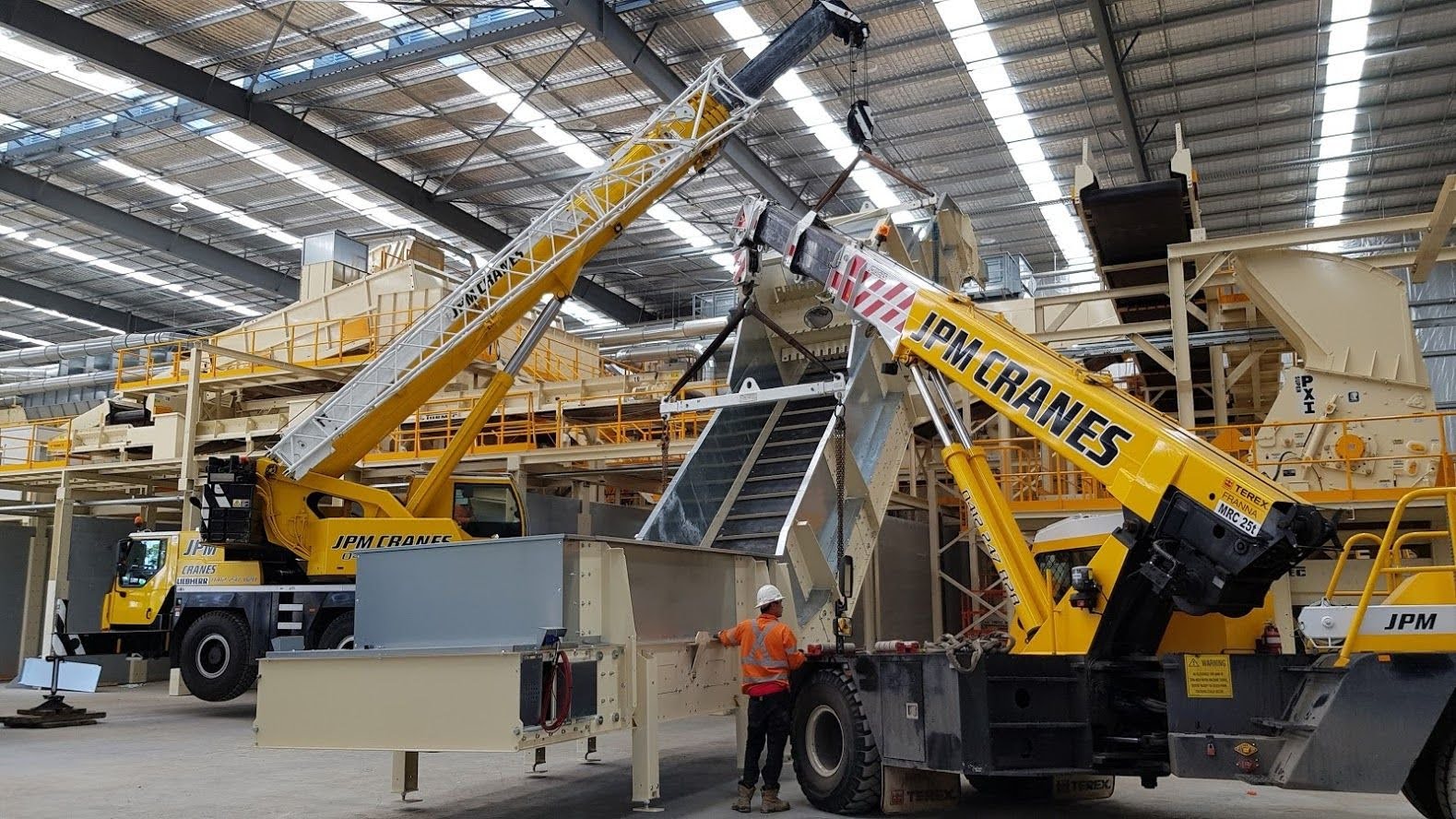
- Analyse Waste Management Costs: Review collection, transportation, and disposal expenses. This may include evaluating whether using transfer trailers instead of smaller haulage vehicles could reduce transport frequency and overall operational costs.
Conclusion
You have now formed an understanding of the waste audit’s function to help you make educated decisions about making progress by optimising your company’s process. If you require further assistance on waste management solutions, please contact OGTEC. We understand the waste management importance in the industrial sector, offering customised waste & recycling solutions, including collecting, sorting, processing & recovering resources, utilising smart technologies & automating the recycling process to enhance efficiency, save resources and improve work processes. Please contact us for more information!
FAQs
How often should my business conduct a waste management audit?
It is okay to conduct a waste audit at least once annually. If your industry is producing high-waste, then you can go for quarterly audits.
Will a waste audit interrupt my daily operations?
No, waste audits are usually planned to minimize disruption. Most waste assessments run alongside regular operations without affecting productivity.
What Internal Data Should We Prepare Before An Audit Begins?
You can prepare:
- waste invoices,
- vendor contracts,
- disposal records,
- production data, and
- any internal sustainability reports.
These inputs help the waste management audit role accurately evaluate inefficiencies and identify improvement opportunities.
How Do We Calculate The ROI Of A Waste Management Audit?
Use this formula to calculat the ROI (%) = [(Total Annual Savings – Audit Cost) ÷ Audit Cost] × 100
Where:
- Total Annual Savings = Disposal cost reduction + Recycling revenue + Efficiency savings + Avoided penalties
- Audit Cost = Total cost of conducting the waste audit
What Impact Does the Season Have on Waste Audit Results?
Misleading averages may occur due to large increases in production during particular seasons. In order to look for any long-term waste trends, audits should be based upon data from several months’ worth of activity at a particular facility.