What Can We Build with Shredded Tyre Bricks?
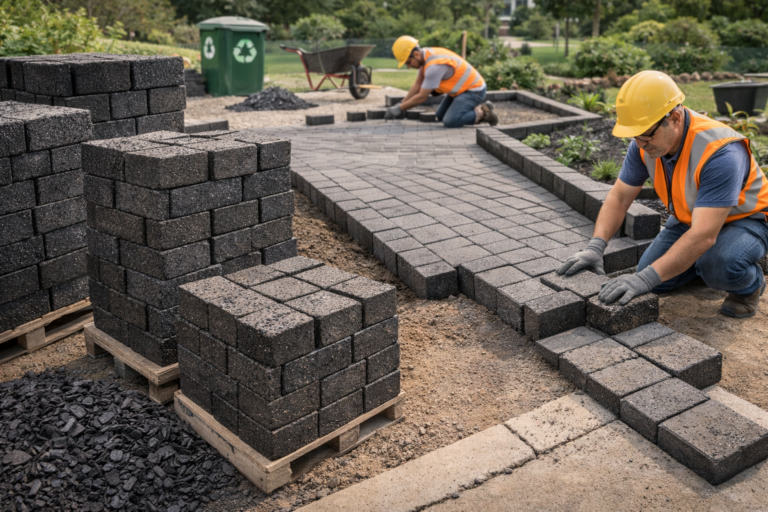
For businesses operating in construction, civil engineering, landscaping, or infrastructure development, material selection directly impacts project performance, cost efficiency, and environmental compliance. Clients today expect solutions that are not only durable and structurally reliable but also aligned with sustainability goals and regulatory standards. In response to these evolving expectations, shredded tyre bricks have emerged as a forward-thinking solution. Instead of treating tyre waste as a disposal challenge, businesses can transform it into a high-value construction material that supports landfill diversion targets and responsible sourcing strategies. So, what can be built with shredded tyre bricks, and how can they support your next development project? Let’s explore the possibilities.
Overview of Shredded Tyre Brick ApplicationsShredded tyre bricks convert end-of-life shredded tyres into durable, shock-absorbing construction blocks that support sustainable building practices. Engineered for strength, moisture resistance, and vibration control, recycled tyre bricks are used in retaining walls, road embankments, drainage systems, sound barriers, and industrial foundations. They offer a lower-carbon, cost-efficient alternative while helping address waste tyres and environmental pollution through practical recycling solutions. |
What Are Shredded Tyre Bricks?
Shredded tyre bricks are engineered construction units made from processed end-of-life tyres. The tyres are mechanically shredded, cleaned to remove steel and fibre, and compressed into dense, stable brick-like forms. Designed for structural and sub-base applications, they provide strength, flexibility, impact absorption, and effective load distribution. Unlike loose tyre chips, these bricks offer consistent shape and performance, making them suitable for embankments, retaining systems, drainage layers, and lightweight fill solutions in commercial and infrastructure projects.
Why is the Construction Industry Turning to Tyre Bricks?
The construction industry is shifting toward shredded tyre bricks because they are able to solve environmental as well as real-time engineering problems simultaneously. Let’s learn about its advantageous in detail.
Shock and Vibration Absorption
Rubber naturally absorbs impact. Tyre bricks reduce vibration transfer and handle dynamic loads more effectively than rigid masonry blocks. This makes them suitable for retaining walls, road edges, railway zones, and areas exposed to movement or pressure. By incorporating tyre recycling practices, tyre shredding streamlines industrial waste management, turning what would otherwise be environmental waste into a high-performance construction material.
Lightweight but Stable
The use of tyre bricks is much easier for transporting and installing, as they weigh less than concrete blocks. Although tyre bricks are considered to be light, they are also manufactured to remain structurally stable and have good load distribution properties; thus, they will achieve their performance, whether used in non-supporting or support applications.
Supporting Compliance and Reporting
Beyond their technical benefits, shredded tyre bricks also play a role in environmental accountability. Businesses can integrate recycled tyre bricks while adhering to reporting standards, demonstrating the waste management audits role in monitoring and documenting sustainable material use. This helps companies meet regulatory requirements and track their environmental performance effectively.
Durability and Weather Resistance
Tyre bricks are resistant to moisture, UV exposure, and chemical degradation, making them suitable for outdoor and infrastructure projects exposed to harsh conditions. They maintain integrity over time, reducing maintenance costs.
Cost Efficiency and Resource Optimisation
Using shredded tyre bricks can lower material and transportation costs due to their lightweight nature and availability as recycled products. Businesses also benefit from reduced reliance on virgin materials, improving resource efficiency and meeting sustainability targets.
Innovative Construction Applications of Shredded Tyre Bricks
Now that we understand why the construction industry is adopting shredded tyre bricks, the real question becomes: where exactly can they be used? Let’s explore how they are being used in real-world building environments.
Slope stability and retaining walls
Because they can effectively distribute soil pressure and are lighter than concrete, shredded tyre bricks are utilised in retaining walls.
Because of their elasticity, they can withstand slight shifts and ground movement without breaking. This makes them appropriate for embankments and soil settlement-prone locations. Rigid concrete blocks may break under such circumstances, whereas tyre bricks are more resilient to changes in stress.
Flood-Resilient and Drainage Structures
Water resistance is one of the strongest material advantages of tyre bricks. Unlike porous masonry, they do not absorb water easily, which makes them suitable for flood-prone areas and drainage channels.
They can be integrated into stormwater management systems, erosion control structures, and landscape retaining barriers where durability under moisture exposure is essential.
Sound Barrier Walls in Urban Areas
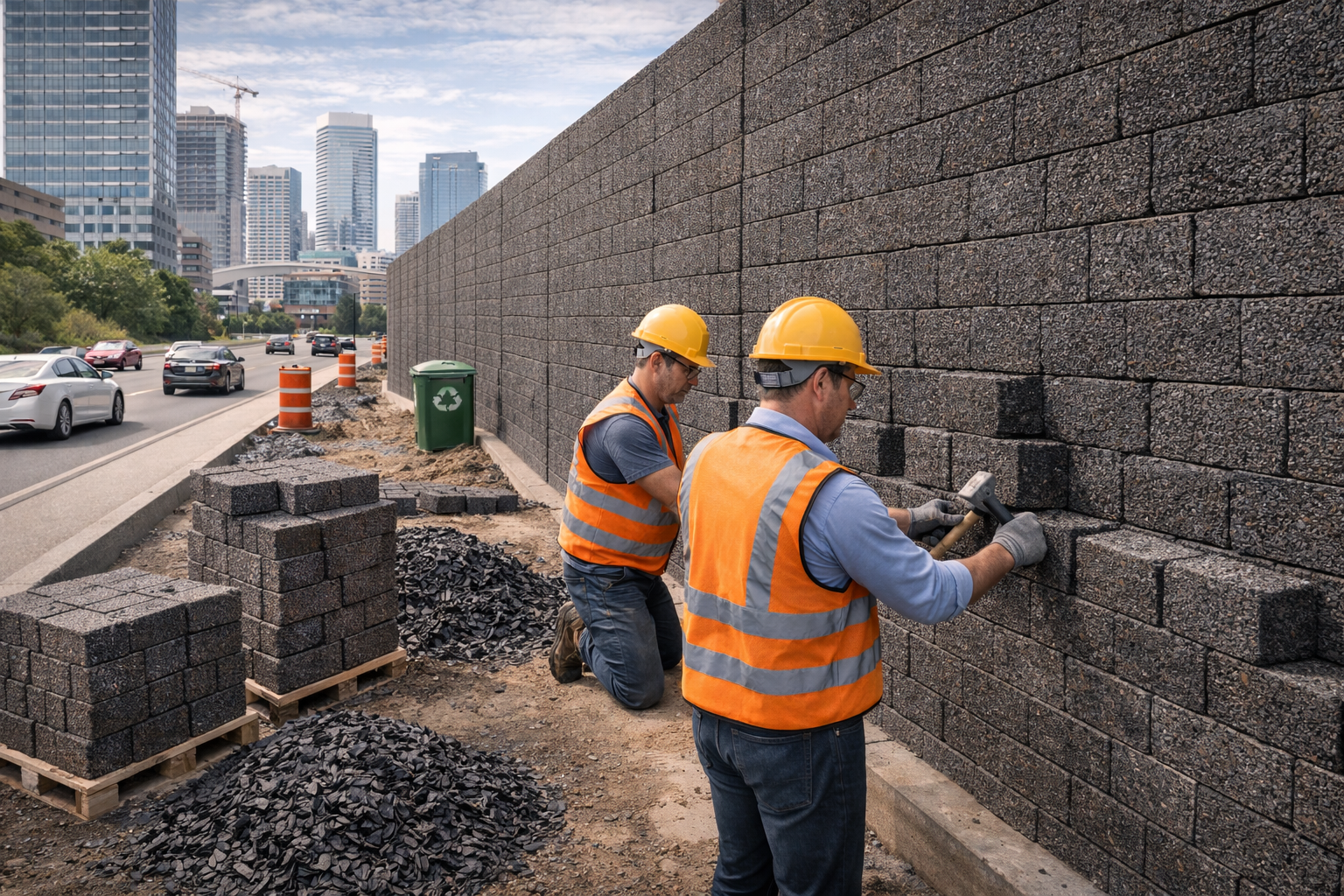
Acoustic-dampening properties of compressed rubber make shredded tyres ideal materials for sound barrier walls constructed along freeways, industrial areas, and residential developments in urban environments, where noise mitigation strategies become necessary when developing an urban infrastructure project.
By incorporating the sound-dampening feature of the product into the design of the structure rather than incorporating multiple layers of acoustic insulation over the surface of the structure, it will be easier to construct these sound barrier walls because one layer of the material provides most of the sound isolation that is needed.
Playground and Recreational Foundations
Safety is a primary concern in playground construction. Because tyre bricks absorb impact, they are ideal for sub-base layers beneath play surfaces. Their cushioning behaviour reduces injury risk compared to rigid foundation materials.
They are also used in park landscaping features, garden borders, and pathway edging, where durability and safety are both required.
Lightweight Fill for Infrastructure Projects
Large infrastructure developments often require fill materials to raise ground levels or support roadbeds. Traditional fill increases structural load significantly.
Shredded tyre bricks, due to their lower density, serve as lightweight structural fill. This reduces pressure on weak soils and helps prevent long-term settlement issues. For bridge approaches and elevated roadway sections, this property is particularly valuable. By converting discarded tyres into high-performance construction materials, shredded tyre bricks also help manage industrial waste streams, turning potential environmental liabilities into sustainable building resources.
Industrial Flooring Base Systems
In industrial zones where heavy equipment operates, vibration control is essential to protect both machinery and structural integrity. Tyre bricks can be incorporated beneath flooring systems to dampen vibrations and absorb repetitive impact forces.
Beyond their technical benefits, this approach gives discarded tyres a second life, helping mitigate waste tyres and environmental pollution. This application extends equipment lifespan and improves operational stability within factories or warehouses.
Conclusion
Successfully adopting advanced recycled tyre bricks takes more than intent; it requires the right equipment, well-designed systems, and experienced industry expertise to ensure consistent, high-quality results. If you’re looking for a dependable way to manage tyre recycling and waste processing challenges, OGTEC brings together the engineering knowledge, tailored equipment, and integrated solutions needed to turn those challenges into efficient, high-performance outcomes.
Connect with us today and explore how engineered recycling solutions can help power the next generation of sustainable construction.
FAQs
What engineering testing is required before using shredded tyre bricks in a project?
Projects typically require geotechnical assessment, load distribution analysis, and compliance verification to ensure suitability for site-specific conditions and performance standards.
Can shredded tyre bricks reduce project settlement in weak soil conditions?
Yes, due to their lower density compared to traditional fill materials, they can reduce vertical stress on weak subgrades, helping minimise long-term settlement risks.
How do shredded tyre bricks perform under heavy traffic loads?
When properly engineered within road or embankment systems, they help absorb dynamic loads and reduce vibration transfer, contributing to structural stability.
Are there fire safety considerations when using shredded tyre bricks?
Fire risk is significantly reduced once tyres are processed and compacted into brick form; however, site-specific fire safety regulations should always be considered in project planning.
Do shredded tyre bricks require specialised installation equipment?
In most ground-support and embankment applications, they can be installed using standard civil construction equipment, reducing the need for specialised machinery.