Importance of Waste Management in the Industrial Sector: Key Practices and Benefits

Did you know that industries produce almost 50% of the world’s total waste, which is over 2 billion tons?
This statistic alone highlights why industrial waste management is more than just a regulatory requirement. Companies that implement smart waste strategies, like recycling and sustainable disposal, can significantly lower their carbon footprint while improving their bottom-line finances. Moreover, effective waste management strategies help businesses stay compliant and avoid hefty fines.
In this article, we’ll break down the key industrial waste management practices industries should adopt and explore the many benefits of going green. Let’s get started!
Industrial Waste Management: Key InsightsEffective industrial waste management protects the environment, supports regulatory compliance, reduces operational costs, and improves workplace safety. Industries can manage waste responsibly through audits, proper segregation, the 3Rs approach, suitable treatment and disposal methods, waste-to-energy conversion, and circular economy practices. Advanced technologies such as AI and IoT further improve efficiency, while professional waste management partnerships help businesses handle complex waste streams, meet environmental obligations, and achieve long-term sustainability goals. |
Types of industrial waste
Industrial garbage is a byproduct of manufacturing, mining, construction, and other industrial processes. Below is a detailed breakdown of different types of industrial waste.
Solid Waste
Solid waste refers to non-liquid materials discarded by industries. This includes manufacturing leftovers, damaged goods, and packaging materials. These materials are generally not hazardous but can contribute to significant landfill waste if not managed correctly.
Hazardous Waste
This includes toxic, flammable, corrosive, or reactive materials that can harm humans, animals, and the environment. These wastes require careful handling and disposal. Common examples include chemical solvents used in manufacturing processes, such as acetone, and heavy metals like mercury found in electronics and batteries, which can cause serious environmental damage if not disposed of properly.
Liquid Waste
Liquid industrial waste is wastewater generated during manufacturing, cleaning, and chemical processing. It often contains pollutants like lead, mercury, cadmium, and arsenic that can severely affect water bodies and human health.
Gaseous Waste
Industries release harmful gases, such as carbon dioxide (CO2), sulfur dioxide (SO2), and nitrogen oxides (NOx), during processes like combustion and chemical reactions. These emissions contribute to air pollution and climate change.
Electronic Waste (E-Waste)
It consists of discarded electrical and electronic devices containing hazardous substances such as lead, mercury, cadmium, and brominated flame retardants. The Global E-waste Monitor 2024 reports that 62 million tonnes of e-waste were generated globally in 2022, while only 22.3% was formally collected and recycled. As technology advances, e-waste remains the world’s fastest-growing waste stream, increasing environmental and health concerns.
Biomedical Waste
Biomedical waste refers to waste generated from medical and pharmaceutical activities, including hospitals, research labs, and drug manufacturing facilities. This waste can be infectious, toxic, or radioactive, requiring strict disposal procedures to prevent contamination and health risks.
Take control of your industrial waste with smarter, safer, and more sustainable solutions designed to reduce costs, simplify compliance, and protect the environment. |
Industrial Waste: From Generation to Sustainable Recovery
Industrial waste management involves more than simply removing unwanted materials from a facility. Each waste stream can follow a different path depending on its composition, potential risks, and recovery opportunities. From generation to collection, handling, treatment, recovery, and final disposal, every stage influences environmental performance and operational efficiency. Understanding this journey helps industries identify where resources can be recovered, unnecessary waste can be avoided, and responsible management decisions can create greater value while supporting safer, more sustainable operations.
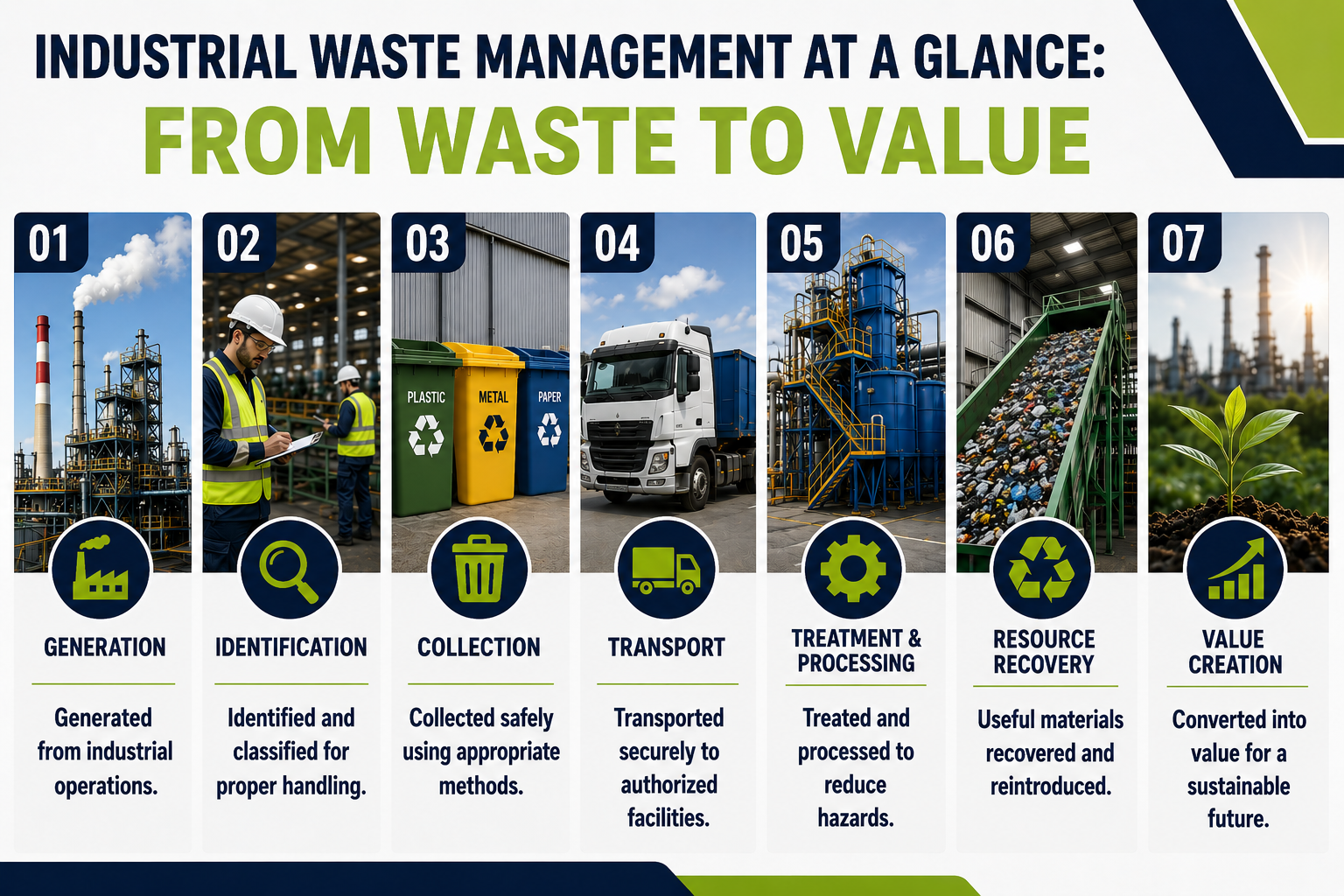
Importance of Industrial Waste Management
Environmental Protection
As per a survey published in the Journal of Environmental Management, the textile industry is responsible for 20% of global wastewater pollution, as dyeing and finishing processes release toxic chemicals into rivers. Moreover, the electronics industry contributes 50 million metric tons of e-waste annually, with improper disposal leading to soil and groundwater contamination.
These are just a few examples of the impact of improper waste disposal on human health and the environment. Solid waste, hazardous chemicals, and untreated wastewater can pollute soil, air, and water; hence, proper industrial waste management is vital.
Regulatory Compliance & Legal Obligations
Governments worldwide have strict environmental and Industrial Waste Management regulations that industries must follow. Non-compliance can result in hefty fines, legal action, or even shutdowns. For instance, in Australia, the Environment Protection Authority (EPA) enforces industrial waste treatment through acts and regulations that govern the handling, storage, transport, processing, recycling, and disposal of waste, which are vital for industries to comply.
Cost Reduction & Resource Optimisation
Effective waste management helps industries save money by reducing disposal costs, recycling materials, and optimising resource use. Many waste materials can be repurposed instead of discarded. For example, Coca-Cola has a plastic recycling initiative that reuses plastic waste to create new bottles, cutting down plastic production expenses.
Improved Public Health & Workplace Safety
In August 2018, a significant industrial fire occurred at a warehouse in West Footscray, Melbourne, Victoria. The fire emitted a large plume of toxic black smoke, visible across Melbourne, and took several days to fully control. Residents in surrounding areas were advised to close windows and doors due to the smoke, and there were concerns about potential health effects from exposure to the chemicals involved. This was a wake-up call for industries dealing with toxic or hazardous waste, as this waste exposure can cause respiratory diseases, skin infections, and even cancer.
Boosts Corporate Reputation & Sustainability Goals
Consumers and investors are increasingly favouring companies that prioritise environmental sustainability. For example, IKEA aims to become a circular business by 2030, using recycled and renewable materials while reducing waste. Unilever has committed to cutting plastic waste by 50%, attracting eco-conscious customers and investors. Sustainable commercial waste management practices improve corporate social responsibility (CSR), helping businesses build trust with stakeholders and the public.
Key Practices for Effective Waste Management in Industries
Conduct a Waste Audit
A waste audit is a systematic process to identify, categorise, and quantify the types of waste produced by an industry. Industries can adopt this practice by establishing a waste auditing team that monitors waste flow throughout the manufacturing or service processes. Regular audits allow companies to assess the efficiency of their industrial waste treatment strategies, identify inefficiencies, and find opportunities for waste reduction.
Waste Segregation & Classification
Proper waste segregation and classification ensure that different types of waste—such as hazardous, recyclable, and biodegradable—are handled in an appropriate manner. By separating waste at the source, industries reduce contamination and improve recycling efficiency.
How Industries Can Adopt It:
- Establish separate waste bins for different waste types within facilities.
- Train employees to correctly dispose of waste materials.
- Use colour-coded waste disposal systems to streamline sorting
The benefits include improved recycling rates, reduced landfill waste, and minimised health and environmental risks.
Reduce, Reuse, and Recycle (3Rs Approach)
The 3Rs approach—Reduce, Reuse, and Recycle—aims to minimise industrial waste generation. This rule states the reduction of raw material consumption, reusing materials within the production cycle, and recycling waste wherever possible.
For example, the steel industry recycles scrap metal, reducing the need for virgin materials. Industries can reduce packaging waste by switching to bulk materials or reusing containers. By establishing robust recycling programs and encouraging employees to recycle on-site, industries can not only cut costs but also lower their environmental footprint and energy consumption in manufacturing.
Efficient Waste Disposal & Treatment Methods
Industries should use appropriate methods to dispose of or treat different types of waste. Common disposal methods include:
- Incineration: Used for hazardous and biomedical waste disposal.
- Landfilling: Used for non-recyclable and inert materials.
- Chemical Treatment: Neutralizes toxic waste before disposal.
- Biological Treatment: Uses microbes to break down organic waste.
This practice reduces environmental pollution, minimises health risks, and ensures compliance with legal industrial waste management regulations.
Waste-to-Energy (WTE) Conversion
Waste-to-energy (WTE) technology enables industries to convert suitable industrial waste, including organic materials, biomass, and certain plastics, into useful energy such as electricity and heat. Industries can adopt WTE systems on-site or collaborate with specialised waste-management companies and local authorities. A 2025 review published in Materials Advances found that thermal WTE processes can reduce waste volume by up to 90%, demonstrating their potential to minimise disposal requirements while recovering energy from waste. With appropriate emission controls and waste-sorting practices, WTE can support more efficient industrial waste management and resource recovery.
Adoption of Circular Economy Principles
A circular economy focuses on extending the lifecycle of products through reusing, repairing, remanufacturing, and recycling rather than discarding them. By adopting circular economy principles, industries can reduce waste generation and minimise their environmental footprint. Companies can design products with the end of their life cycle in mind, ensuring they can be easily recycled or repurposed. For example, Adidas uses recycled ocean plastic in its footwear production, which reduces marine pollution and gives the materials a new life.
Implementation of Advanced Waste Management Technology
Advancements in waste management technology, including the use of Artificial Intelligence (AI), the Internet of Things (IoT), and automation, play a crucial role in streamlining industrial waste treatment processes. Industries can implement smart waste management systems to monitor waste generation and optimise waste collection schedules in real-time. For example,
- ZenRobotics uses AI-powered robotic arms to sort and separate waste materials, improving sorting accuracy and recycling efficiency.
- Smart waste bins equipped with IoT sensors can be used to track fill levels and send alerts when they need to be emptied, optimising collection routes and reducing operational costs.
- In the food industry, AI-powered software can be used to track inventory and predict demand, reducing food waste by preventing overproduction.
- Drones are being used for monitoring landfills, helping industries manage large waste areas efficiently.
These technologies make waste management more efficient, sustainable, and cost-effective.
Partnering with Waste Management Companies
Collaborating with professional waste management companies allows industries to access specialised expertise and services for handling different types of waste, especially hazardous materials. These companies can assist in waste segregation, recycling, disposal, and compliance with waste disposal regulations.
OGTEC has been a leading waste management service provider in Australia since 2015, serving key areas, including Sydney, Brisbane, and Melbourne. We offer tailored waste management solutions across various sectors, specialising in the safe disposal of hazardous waste, recycling programs, and ensuring compliance with environmental standards. By partnering with us, you gain access to industry-leading tools and technologies, such as advanced waste-tracking systems and environmental monitoring. These solutions help industries optimise waste management practices, improve efficiency, and reduce environmental impact.
Conclusion
Effective industrial waste management in industries is not just a regulatory obligation; it’s a strategic move that benefits businesses, the environment, and public health. By adopting these practices, being through with the future of sustainable waste and recycling solutions, and partnering with waste management companies like OGTEC, industries can reduce costs, enhance sustainability, and stay ahead in an eco-conscious market.
Strengthen your industrial waste strategy with reliable solutions designed to improve compliance, reduce environmental impact, and keep your operations running efficiently. |
Frequently Asked Questions About Industrial Waste Management
Q1. How can a business measure its industrial waste management performance?
Businesses can track waste generation per production unit, diversion from landfill, recycling rates, disposal costs, and year-over-year reductions to measure performance.
Q2. What should companies consider when choosing a waste management provider?
Companies should evaluate licensing, experience with specific waste streams, treatment capabilities, tracking systems, service coverage, compliance records, and transparent pricing before selecting a provider.
Q3. What documentation should businesses maintain for industrial waste?
Businesses may need records covering waste classifications, quantities, collection details, transport documentation, receiving facilities, treatment or disposal outcomes, and required regulatory reports.
Q4. When should a business seek professional waste classification advice?
Professional advice helps when waste composition is complex, classification is uncertain, new waste streams emerge, or specialised handling and regulatory requirements apply.
Q5. Can businesses recover value from industrial waste?
Yes. Depending on its composition and quality, industrial waste may provide recoverable materials, reusable components, secondary raw materials, or other resources that can reduce purchasing and disposal costs.