Industrial Waste Recycling | Types, Methods and How They Can Benefit Your Business
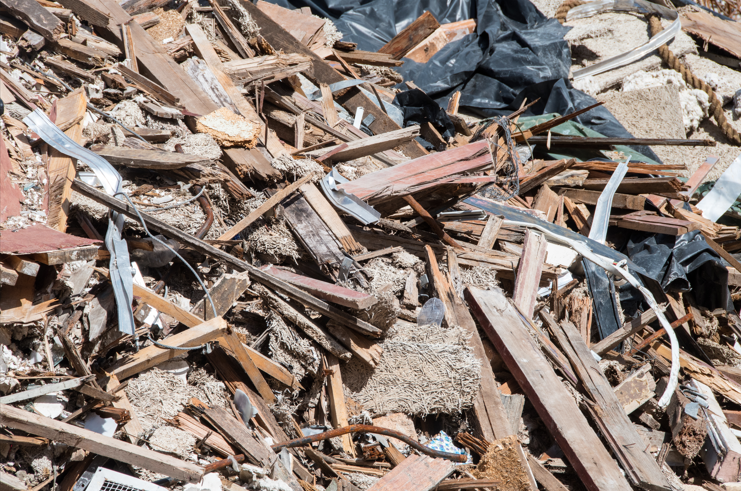
If you run a business in manufacturing, construction, or food processing, you already know these industries generate serious amounts of waste. Across Australia, this industrial waste piles up fast, and it’s no secret that all that plastic, glass, metals, and other by-products from daily operations end up creating a genuine environmental and cost problem. This is why recycling becomes important. It’s not only better for the environment, but it also helps your business stay compliant with waste regulations, like the Recycling and Waste Reduction Act 2020 and state-based EPA requirements. So, what exactly does industrial waste recycling cover? Well, that’s what we will learn together in this guide. Let’s begin.
Overview: Industrial Waste Recycling in AustraliaIndustrial waste recycling turns manufacturing, construction, etc industries’ by-products—like metals, plastics, wood, and e-waste—into reusable resources instead of landfill. Businesses use methods such as mechanical, chemical, and electrochemical recycling to recover materials. Beyond environmental impact, it cuts raw material costs, generates resale revenue, and supports compliance with Australian waste regulations. |
Common Recyclable Industrial Waste Materials
Metals
Metals are among the most recyclable materials in industrial settings due to their inherent durability and value.
Ferrous Metals (Iron and Steel): These are abundant in many industries, including construction materials, automotive components, and machinery.
Non-Ferrous Metals (Aluminium, Copper, Zinc): Aluminium recycling is particularly impactful, requiring significantly less energy than primary production.
Plastics
Plastic waste poses a significant environmental challenge, but advancements in recycling technologies are helping mitigate the issue.
Polyethylene Terephthalate (PET): Widely used in packaging and textiles, PET is one of the easiest plastics to recycle into new products like fibers and containers.
High-Density Polyethylene (HDPE): Commonly found in pipes, drums, and containers, HDPE is valued for its toughness and ease of recycling.
Paper and Cardboard
While not as dominant in industrial waste recycling streams as metals or plastic recycling, paper and cardboard are highly recyclable.
Cardboard Packaging: Used extensively in shipping and storage, corrugated cardboard is recycled into new boxes or insulation materials.
Industrial Paper: Waste paper from offices or manufacturing operations is repulped to create products like tissue, newsprint, or recycled paperboard.
Wood Waste
Industrial processes often generate substantial wood waste, particularly in construction, furniture manufacturing, and shipping.
Damaged Wooden Pallets: These can be repaired, reused, or processed into wood chips for biofuel or mulch.
Engineered Wood Products: Wood waste can be repurposed into products like particleboard or medium-density fiberboard (MDF).
Construction and Demolition (C&D) Waste
Building and demolition materials account for a significant share of recycled materials.
Concrete and Asphalt: These materials are crushed into aggregate for use in roadbeds, foundations, or new construction projects.
Gypsum (Drywall): Waste drywall can be recycled into new drywall or used as a soil conditioner.
Glass
Glass is one of the most sustainable materials, as it maintains its integrity throughout the recycling process, reducing the need for raw materials, saving energy, and lowering carbon emissions.
Bottles and Jars: These can be melted down and reformed indefinitely without losing quality.
Recycled Glass from Windows: This can be used to create new glass items or transformed into fiberglass insulation.
Rubber and Tires
The rubber industry, especially automotive manufacturing, generates significant waste.
Recycled Tires: Tires can be shredded using industrial shredders into crumb rubber, primarily used for playground surfaces and asphalt mixes. Only a small portion of this material is reintroduced into new tire manufacturing as a minor additive, since vulcanized rubber can’t be fully remelted like virgin rubber.
Industrial Rubber Scrap: Conveyor belts and hoses are often repurposed or processed into raw materials for new products.
Electronic Waste (E-Waste)
The rapid turnover of industrial equipment, such as computers, servers, and machinery, leads to e-waste accumulation.
Metals and Rare Earths: Gold, silver, platinum, and rare earth metals in electronics can be recovered through advanced recycling techniques.
Plastic Casings and Wires: These components are shredded and recycled into raw materials for new electronic devices.
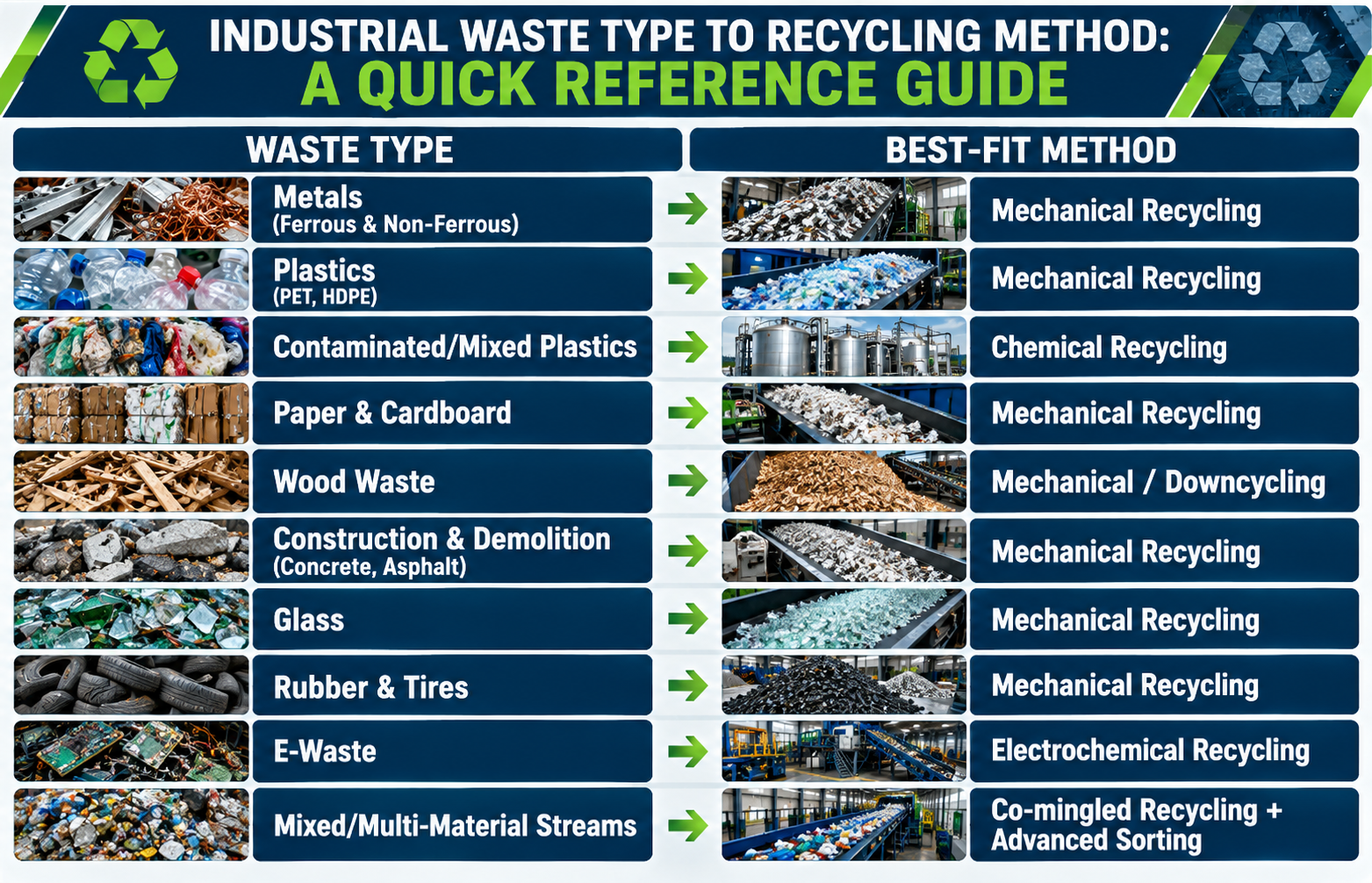
Which Recycling Method Is Right for Your Waste Type?
Not every waste stream is recycled the same way, as the right method depends on the material’s composition, contamination level, and end use. Here’s what you need to know about which method fits your common industrial waste type at a glance:
Not Sure Which Recycling Equipment Suits Your Waste Stream? Be it sorting or shredding, we help Australian businesses set up the right system for their specific waste type. |
Methods of Recycling Industrial Waste
Mechanical Recycling: This involves physically processing waste materials to prepare them for reuse without changing their chemical composition. In fact, according to Chemistry Australia, mechanical recycling is the most common approach used for recycling plastics like PET, HDPE, and PP, typically involving collection, sorting, shredding, washing, and extrusion into pellets.
Chemical Recycling: Chemical processes break down materials into their original components, allowing them to be reused as raw materials.
Downcycling: This involves converting waste materials into new products of lower quality or functionality than the original.
Electrochemical Recycling: Electrochemical methods recover valuable materials from industrial waste, particularly in the electronics and metal industries.
Industrial Symbiosis: This approach involves industries collaborating to exchange waste materials, turning one industry’s waste into another’s resource.
Co-mingled Recycling: A system where materials like paper, plastics, metals, and glass are collected together instead of being sorted at the source is known as co-mingled recycling.
Advanced Sorting Technologies: Innovative sorting systems, such as AI-driven robotic sorting, optical scanners, and magnetic separators, are pivotal in ensuring the success of recycling methods. The Department of Climate Change, Energy, the Environment and Water confirms that Australian material recovery facilities now rely on this exact mix of trommels, magnets, eddy currents, and AI-controlled units to separate recyclables at scale.
Benefits of Industrial Recycling for Your Business
Revenue from Recycled Materials: Many industrial waste materials, such as metals, paper, and plastics, have resale value. Recycling these materials can generate an additional revenue stream.
Reduced Raw Material Costs: Recycling materials allows businesses to reuse them in their production processes, minimizing the need for purchasing new raw materials.
Improved Regulatory Compliance: Governments worldwide are imposing stricter regulations on industrial waste disposal, as these are the future of waste and recycling solutions. Adopting recycling helps businesses comply with these rules and avoid penalties.
Energy Savings and Lower Carbon Footprint: Recycling consumes significantly less energy compared to producing materials from scratch, reducing greenhouse gas emissions and lowering operational costs. For example, according to the ACT Government, aluminium recycling alone saves 95% of the energy needed for primary aluminium production, and roughly 75% of all aluminium ever made is still in circulation today because it can be recycled indefinitely.
Access to Tax Incentives and Grants: Governments often provide financial incentives, such as tax credits or grants, to businesses adopting sustainable practices like recycling.
Conclusion
Managing industrial waste doesn’t have to be complex. With the right recycling systems in place, businesses can turn waste streams into savings, meet compliance obligations with ease, and build a genuinely sustainable operation for the years ahead.
If you’re looking for professional equipment to handle your waste, that’s where Ogtec comes in. With experience since 2015, we are one of Australia’s leading providers of waste and recycling capital equipment, offering reliable machinery to help your business recycle smarter.
Why wait when your industry’s next load of waste could be your next revenue stream? |
FAQs- About Industrial Waste Recycling
Q1. How much does industrial waste recycling cost small businesses in Australia?
The overall costs vary by material and volume, but many offset expenses through resale value, tax incentives, and reduced landfill levies.
Q2. Can hazardous industrial waste be recycled?
Some hazardous waste, like certain solvents and metals, can be recycled through specialised licensed facilities under strict handling protocols.
Q3. What records must my business keep in Australia for industrial waste tracking?
You need to retain waste transfer certificates, classification reports, and disposal records to prove regulatory compliance during audits.
Q4. Who is responsible for industrial waste in Australia— the generator or the contractor?
Generators hold primary legal responsibility for correct waste classification, even when a licensed contractor handles collection and processing.
Q5. How often must my business conduct industrial waste audits for compliance?
The frequency depends on licence conditions, as it is not a fixed rule. NSW, Queensland, and Victoria EPAs typically require annual reporting for standard sites.