Conveyor Systems vs Manual Handling: What Makes the Difference?
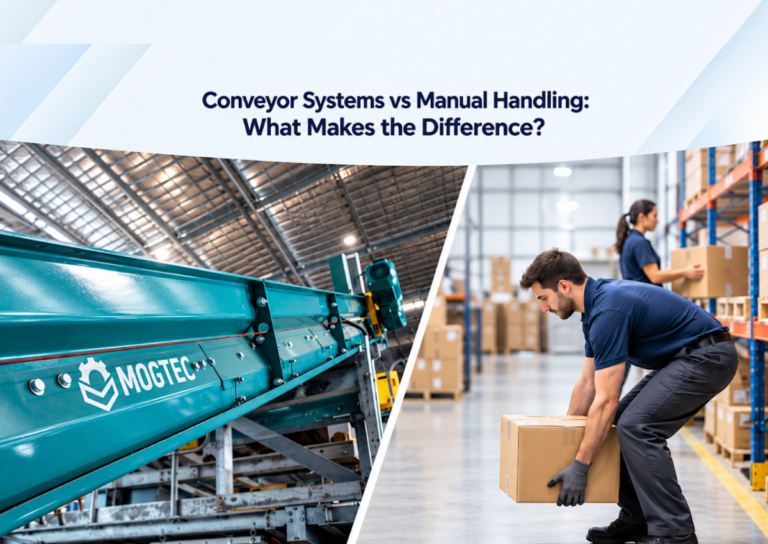
Moving materials from one point to another is part of manufacturing, warehousing, and distribution, but the method can shape workflow and worker demands. A conveyor system creates a route for products to travel, while manual handling relies on people to lift, carry, push, or reposition loads. The difference depends on more than speed: load size and weight, travel distance, handling frequency, floor layout, staffing, and product variability all matter. Understanding these trade-offs between conveyor systems vs manual handling helps businesses assess which approach fits a task, workplace, and safety program. The comparison begins with how materials move through the operation each day.
Conveyor Systems vs Manual Handling: A Quick SummaryConveyor systems automate material transport, while manual handling relies on workers to move items physically. Each method differs in cost, safety, flexibility, maintenance, and productivity. Conveyors suit fixed routes, consistent output, and production environments requiring continuous movement, whereas manual handling offers adaptability for varied tasks and irregular items. Businesses should evaluate workflow demands, ergonomic risks, available space, and long-term operating costs to determine the most suitable material-handling approach. |
What Are Conveyor Systems and Manual Handling?
Conveyor systems and manual handling differ in how materials are moved, the effort required, and the equipment involved. Here’s how each works.
Conveyor systems
Are mechanical equipment designed to move materials, products, or components from one location to another along a defined path. They use mechanisms such as belts, rollers, chains, or powered wheels to transport items with minimal direct physical effort from workers. Depending on the application, conveyors can operate continuously or move materials between specific workstations. They can also support waste-material handling methods by transporting discarded materials between collection, sorting, and processing areas.
Manual handling
Involves workers physically lifting, lowering, carrying, pushing, pulling, or moving materials without relying on automated conveying equipment. It is commonly used for handling individual items, irregularly shaped loads, or materials that require precise positioning. The method depends on the worker’s physical effort, handling technique, and the weight and dimensions of the items being moved.
How Do Conveyor Systems and Manual Handling Compare?
Conveyor systems and manual handling differ in efficiency, safety, flexibility, and cost, particularly when managing different industrial waste streams. The table below compares their key differences.
|
Comparison factor |
Conveyor systems |
Manual handling |
|
Best-fit applications |
Suitable for repetitive, predictable material movement between fixed locations, especially at sustained volumes. |
Better suited to intermittent tasks, irregular workflows, and operations with frequently changing requirements. |
|
Route flexibility |
Follow predefined routes, so layout changes may require equipment modifications and downtime. |
Let workers change routes and adapt to shifting priorities more easily. |
|
Product suitability |
Work best when product dimensions, weight, base shape, and packaging match the conveyor design. |
Accommodate a wider variety of products, although bulky, unstable or awkward loads can increase handling risks. |
|
Throughput and consistency |
Provide predictable flow rates when properly designed, maintained and matched to downstream capacity. |
Output varies with worker availability, fatigue, travel distance, congestion and task complexity. |
|
Physical effort and ergonomics |
Reduce repetitive carrying and transport along the conveyor route, although lifting and transfers may still be necessary. |
Can involve repeated lifting, carrying, bending, reaching and pushing, increasing ergonomic risks. |
|
Safety and injury risks |
Reduce some manual-handling hazards but introduce machinery risks, including entanglement, crushing and moving-part injuries. |
Primarily expose workers to musculoskeletal risks, including strains and back injuries, alongside dropped-load and collision hazards. |
|
Labour requirements and costs |
Reduce the need for repetitive transport labour but require equipment operators, maintenance and technical support. |
Require workers in proportion to workload, and additional staffing can increase overtime and labour costs. |
|
Capital and operating costs |
Require higher upfront investment in equipment, installation, controls and integration, plus ongoing energy and maintenance costs. |
Usually require less fixed investment, although labour, handling aids and ongoing staffing contribute to operating costs. |
|
Space and layout |
Require designated routes, equipment clearances and maintenance access, although overhead systems can use vertical space. |
Offer greater layout flexibility but still need safe aisles, walking routes and space for carts or staged materials. |
|
Scalability and demand changes |
Can handle high volumes efficiently when designed for peak demand, but capacity expansion may require additional equipment or modifications. |
Can accommodate changing demand by adjusting staffing and handling equipment, subject to labour availability and congestion. |
|
Product quality and damage |
Provide controlled movement, but unsuitable speeds, transfers, or conveyor configurations can damage products. |
Allow workers to adapt handling to fragile or unusual items, although fatigue and inconsistent handling can increase damage risks. |
|
Maintenance and downtime |
Depend on equipment reliability; failures can interrupt connected processes and require technical intervention. |
Depend on workforce availability and the condition of handling aids, with disruptions often more localised. |
|
Accuracy and traceability |
Can integrate sensors, scanners and warehouse control systems to support automated tracking and routing. |
Depend more heavily on worker checks, scanning procedures and consistent process execution. |
|
Safety and compliance |
Require appropriate machine guarding, risk management, maintenance and safe operating procedures under applicable regulations and standards. |
Require hazardous manual tasks to be assessed and risks eliminated or minimised in accordance with applicable workplace safety requirements. |
|
Best-fit warehouse tasks |
Repetitive carton or tote transfers, fixed packing lines, sorting operations and regular dispatch flows. |
Irregular receiving, mixed-product picking, returns inspection, damaged-goods handling and short-term workflows. |
These applications demonstrate how conveyor systems revolutionising waste management can help maintain material flow between collection, sorting, and processing stages.
|
Unsure whether conveyor systems or manual handling suit your operation? OGTEC can help assess your material movement needs and identify suitable handling solutions. |
When Should Businesses Choose Conveyor Systems Over Manual Handling?
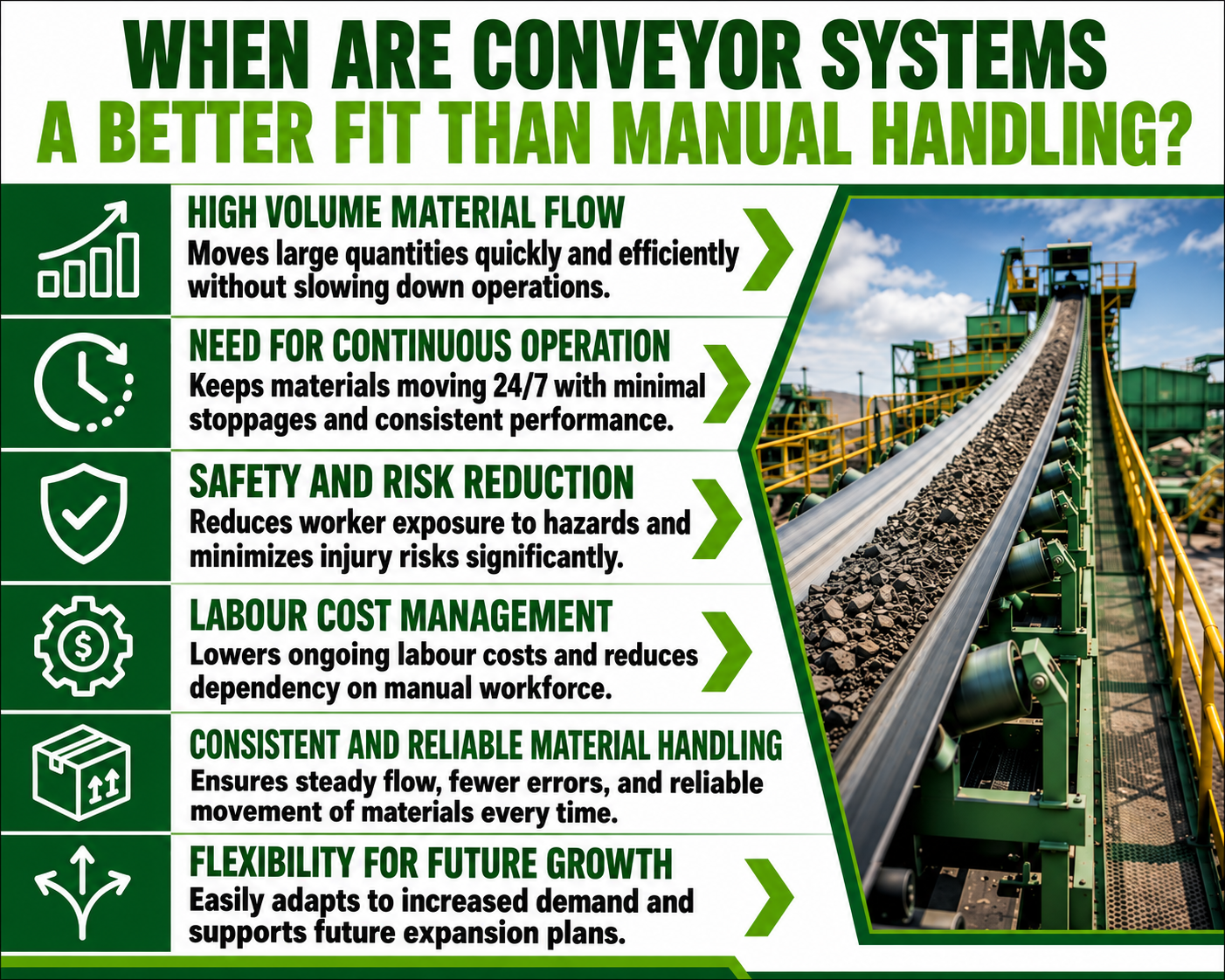
Businesses should consider conveyor systems when material movement is frequent, repetitive, or physically demanding. Conveyors can help maintain consistent workflow, reduce repetitive lifting and carrying, and transport materials between established workstations. This can be particularly useful when addressing Construction and Demolition Waste Challenges, where large volumes of debris must move between collection, sorting, and processing areas. Manual handling may remain more practical for irregular loads, low-volume tasks, or operations requiring frequent changes in direction. Factors such as production volume, material characteristics, available space, workplace safety, and operating costs help determine the most suitable approach.
Conclusion
Choosing between conveyor systems and manual handling affects productivity, workplace safety, and material flow. OGTEC supports businesses with tailored equipment solutions based on their processing needs and operational goals. From process development and plant design to manufacturing, installation, and plant upgrades, our team helps develop efficient material-handling operations that support smoother workflows and long-term performance.
|
Looking to improve your material-handling process? OGTEC can help you identify suitable conveyor solutions for your operational needs and production goals. |
Frequently Asked Questions About Conveyor Systems vs Manual Handling
Q1. How Do Automated and Manual Methods Affect Workplace Safety?
Mechanized transport can reduce lifting-related strain but introduces machinery hazards. Manual handling increases exposure to physical strain when poorly designed. Both require suitable risk assessments and safety measures.
Q2. Can Automated Equipment and Manual Labor Be Used Together?
Yes. Businesses can automate material transport between locations while assigning employees to inspection, assembly, picking, or packaging tasks that require human judgment and precision.
Q3. Which Material-Handling Approach Suits Small Manufacturing Businesses?
Manual methods may suit low-volume operations with changing requirements, while mechanized equipment can benefit businesses with predictable material flows. Space, budget, and production needs determine suitability.
Q4. How Do Maintenance Requirements Differ Between Both Methods?
Mechanical equipment requires inspections, cleaning, and component maintenance. Manual operations require maintaining handling aids, reviewing work practices, and training employees to support safe material movement.
Q5. Can Both Methods Handle Different Types of Industrial Materials?
Yes. Mechanical equipment can transport compatible bulk materials, cartons, and components, while manual methods suit varied items requiring individual attention. Material properties, load limits, and handling conditions determine suitability.