The Future of Sustainable Waste and Recycling Solutions
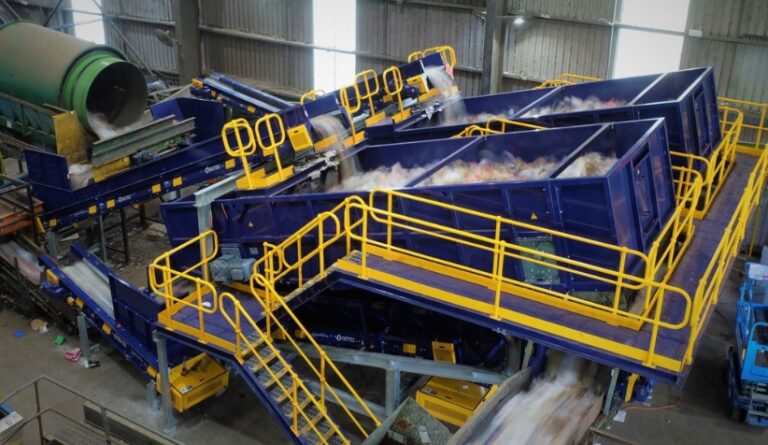
The global waste and recycling crisis is becoming increasingly pressing, with a growing population and increased consumption leading to more waste and limited resources for disposal. Sustainable waste and recycling solutions are essential for addressing this crisis and ensuring a healthier, more sustainable future. In this blog, we will discuss some of the latest innovations in sustainable waste and recycling solutions that are shaping the future of the industry.
Sustainable Waste Solutions Future OverviewRising global waste demands urgent, sustainable solutions to manage limited resources effectively. Innovations like advanced recycling technologies convert non-recyclable plastics into reusable materials, reducing dependency on virgin resources. AI and data analytics enhance waste sorting and system efficiency, increasing recycling rates. Sustainable packaging minimizes environmental impact, while circular economy models extend product lifecycles. Combined with public awareness and industry commitment, these approaches drive a cleaner, more resource-efficient, and sustainable future. |
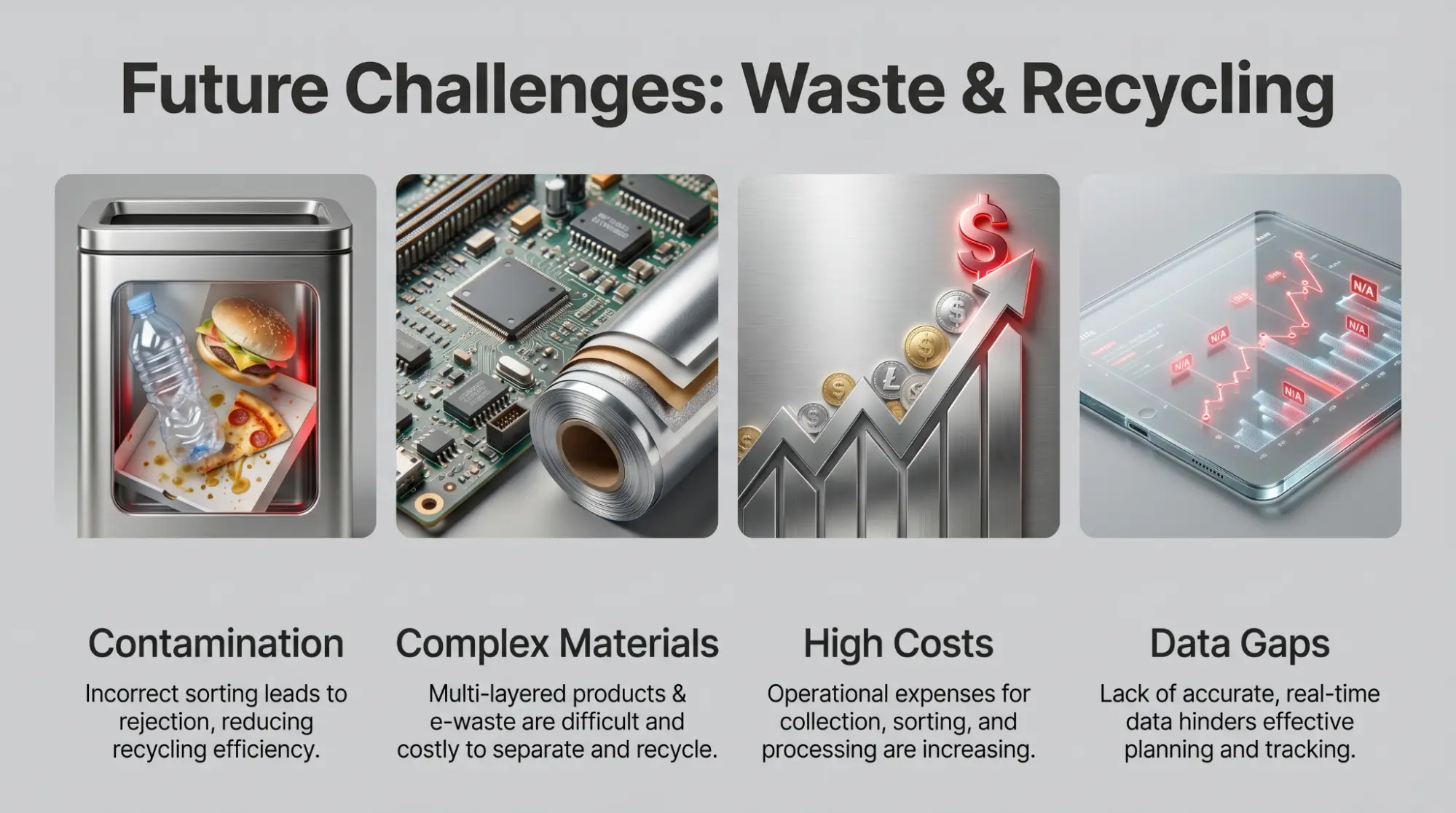
Addressing Future Challenges in Waste and Recycling
Future waste and recycling systems must adapt to rising consumption and increasingly complex materials like e-waste and plastics. Innovation in circular economy practices, advanced sorting technologies, and stronger policies will be essential. Public awareness and global collaboration will also play a key role in building sustainable solutions.
Future-Ready Solutions for Sustainable Waste Management
Advanced Recycling Technologies
Advanced recycling technologies, such as chemical recycling and pyrolysis, offer new opportunities for processing waste that cannot be recycled conventionally. These technologies can convert plastic waste into valuable feedstocks for the production of new materials, reducing the need for virgin materials and reducing waste.
Artificial Intelligence and Data Analytics
Artificial intelligence (AI) and data analytics are being applied to the waste and recycling industry to improve the efficiency of operations and increase recycling rates. AI can be used to identify and sort waste materials, while data analytics can be used to track waste flows and optimize waste management systems.
Sustainable Packaging
Sustainable packaging solutions, such as biodegradable and compostable materials, are gaining popularity as consumers become more aware of the environmental impact of packaging waste. These solutions can reduce waste and promote a circular economy, where waste is minimized and resources are used more efficiently.
Circular Economy Business Models
Circular economy business models, such as product-as-a-service and sharing economy models, are gaining traction in the waste and recycling industry. These models focus on reducing waste and extending the life of products, promoting a more sustainable and efficient use of resources.
Partnering in Supporting a Circular and Resource-Efficient Future
At OGTEC, we are committed to providing innovative and sustainable waste and recycling solutions that address the global crisis. We believe that these solutions, along with greater public awareness and participation, can help to create a healthier, more sustainable future for all. As the industry continues to evolve, we will remain at the forefront of innovation, working to create a more sustainable and efficient waste and recycling industry.
In conclusion, sustainable waste and recycling solutions are crucial for addressing the global waste crisis and ensuring a more sustainable future. Innovations in advanced recycling technologies, AI and data analytics, sustainable packaging, and circular economy business models are shaping the future of the industry. We must continue to explore and develop these solutions, as well as raise public awareness and participation, to create a healthier and more sustainable world.
FAQs
How do businesses benefit from sustainable waste practices?
Businesses reduce costs, improve brand reputation, comply with regulations, and attract eco-conscious customers by adopting sustainable waste management and resource-efficient practices.
What factors should businesses consider when choosing a waste management solution?
Businesses should evaluate waste volume, types of materials generated, regulatory requirements, cost efficiency, and sustainability goals to select the most suitable and scalable waste management approach.
How can facilities prepare for future waste management regulations?
Staying informed, improving waste tracking, adopting flexible systems, and focusing on waste reduction strategies help businesses remain compliant with evolving regulations.
How often should a business conduct a waste audit?
Waste audits should be conducted at least annually, or more frequently for high-volume operations, to identify inefficiencies and track progress toward sustainability targets.
How can businesses adapt to changing waste volumes?
Flexible waste systems, regular monitoring, and scalable processes allow facilities to respond efficiently to fluctuations in waste generation.