Why Compactors Are Essential for Modern Industrial Waste Handling
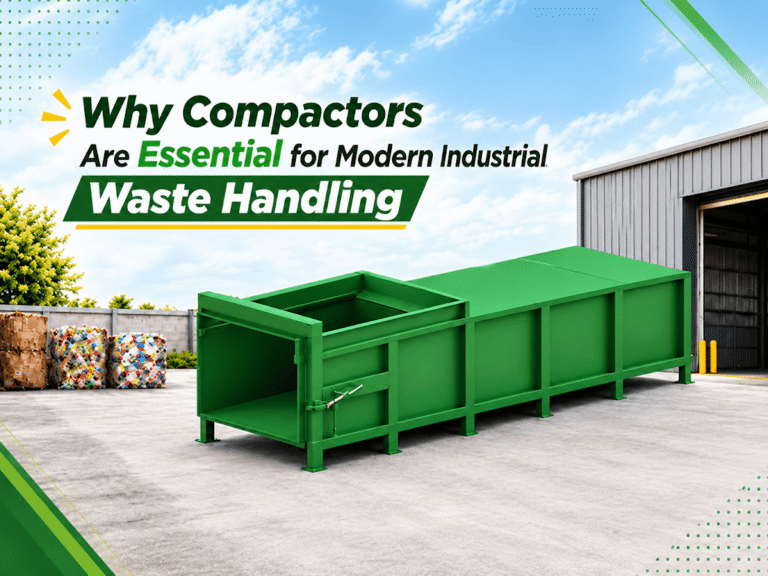
Walk into any busy warehouse or manufacturing plant, and you’ll see it: overflowing bins, wasted floor space, and staff pulled away from real work just to deal with trash. It’s a problem most facility managers know all too well, yet it rarely gets the attention it deserves. That’s where industrial compactors come in. Far from being just “big trash machines,” they’re engineered systems that quietly solve some of the biggest headaches in waste handling: fewer pickups, lower hauling costs, safer work floors, and a smaller environmental footprint. Having worked alongside operations teams who’ve made the switch, we’ve seen firsthand how the right compactor can transform a facility’s efficiency.
In this guide, we’ll break down exactly how that happens, and why compactors in waste management matter more than ever.
Industrial Waste Compaction: Key Efficiency SummaryIndustrial compactors improve waste handling by reducing bulky waste volume, increasing container capacity, and freeing valuable operational space. They can lower collection frequency, improve hauling efficiency, reduce manual handling, and support cleaner, safer work areas. Proper compaction also helps maintain waste segregation, control logistics costs, and reduce unnecessary transport activity. For suitable waste streams, these systems provide a practical way to make industrial waste management more efficient, organised, and sustainable. |
Operational Challenges of Modern Industrial Waste Without Compaction
Waste occupies valuable operational floor space much faster
Industrial waste such as cardboard boxes, plastic film, packaging, foam, containers, and light manufacturing scrap can have relatively low bulk density. Without compaction, bins and staging areas can reach their volume capacity long before reaching a practical weight capacity. Manufacturers may need more dumpsters, larger waste rooms, outdoor storage areas, or more frequent container changes, using space that could otherwise support production, inventory, loading, or equipment. This space pressure is one reason compactors in waste management are increasingly considered in high-volume industrial facilities.
Collection frequency increases as containers fill prematurely
When loose waste takes up more container space, containers may need servicing even though the actual mass of material inside them is relatively low. For an industrial facility, this can mean more pickups, more scheduling coordination, additional truck movements through loading areas, and greater dependence on the waste contractor’s availability. Facilities dealing with construction and demolition waste challenges may also need to consider how bulky or mixed waste streams affect container selection, segregation, and collection planning.
Waste-hauling costs become harder to control
Waste-management costs are not determined solely by the amount of waste produced. Collection frequency, vehicle utilisation, travel distance, labor, container requirements and disposal arrangements all contribute. A business generating large volumes of lightweight waste may pay for repeated container movements rather than efficiently moving a denser payload. Understanding the waste management audits role can also help facilities assess waste volumes, material streams, collection patterns, and equipment requirements before making changes to their waste-management system.
More manual handling can increase ergonomic exposure
If loose waste fills containers quickly, employees may have to move bags, boxes, and secondary containers more frequently. Repeated lifting, carrying, pushing, and repositioning increases material-handling activity. OSHA’s ergonomics guidance notes that repetitive material handling increases the likelihood of musculoskeletal disorders and identifies lifting frequency, load size, stability, posture, and space constraints as important risk factors.
Workplace Safety and Housekeeping Problems
Overflowing or poorly controlled industrial waste can create significant housekeeping concerns. Loose materials may block aisles, accumulate near machinery, spill into pedestrian routes, or create slip and trip hazards. OSHA requires workplaces, passageways, and walking-working surfaces to remain clean, orderly, and free from recognized hazards. Combustible waste such as cardboard, paper, wood, and some plastics can also increase fire-loading concerns when allowed to accumulate.
Difficulty Maintaining Waste Segregation and Recycling
Overcrowded waste-storage areas can make it harder to keep different material streams separated. When containers for cardboard, plastics, production scrap, and general waste fill too quickly, employees may place materials into whichever container has available space. This can contaminate recyclable streams and reduce their recovery value. The U.S. EPA’s waste-management hierarchy prioritizes source reduction, reuse, and recycling ahead of disposal. Properly planned compaction or baling systems can support segregation by providing dedicated capacity for suitable recyclable materials while reducing storage pressure. Facilities can also consider technological advancements in recycling when reviewing how materials are sorted, recovered, and directed into appropriate recycling streams.
How Modern Industrial Waste Compactors Work
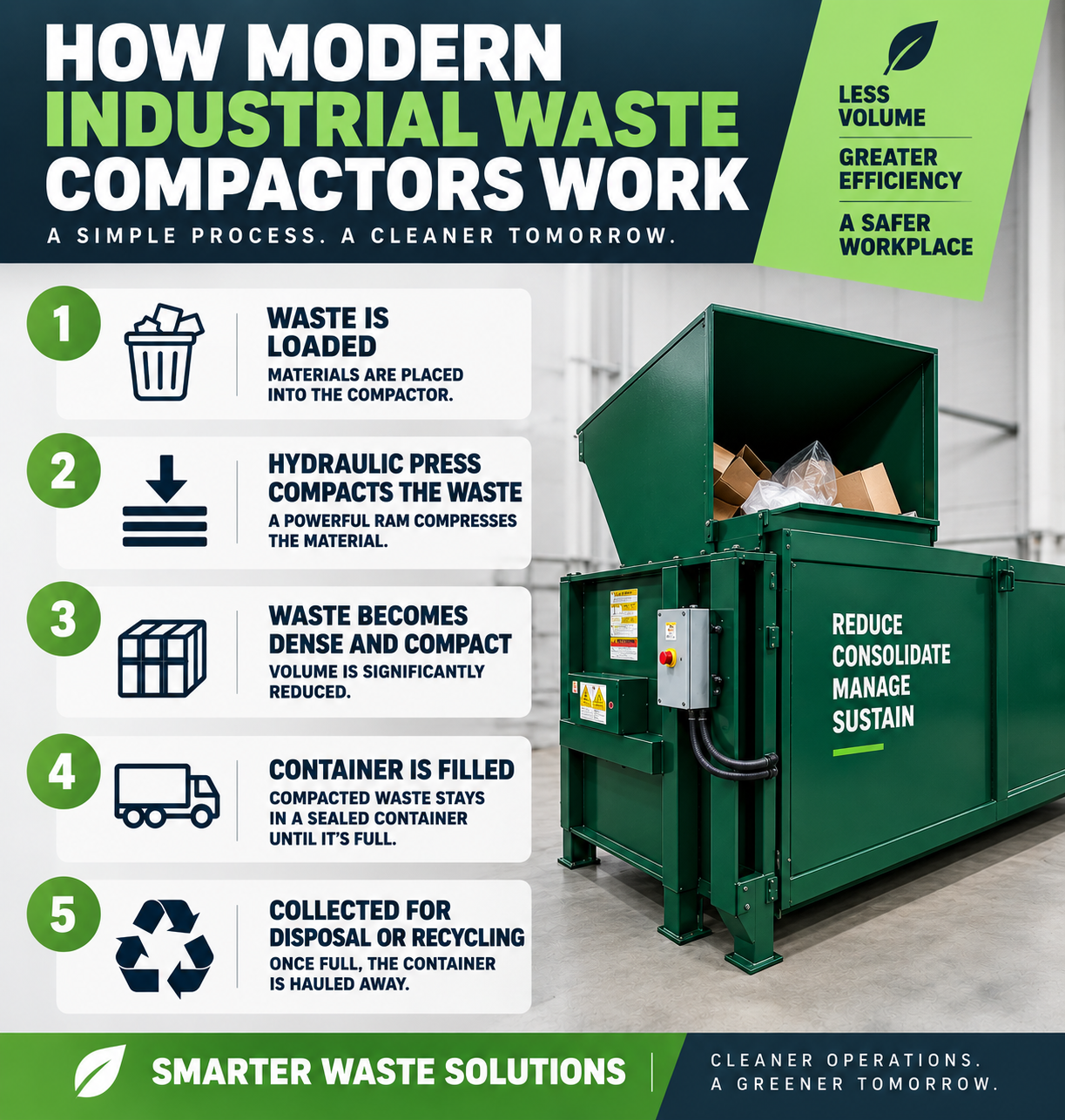
Modern industrial waste compactors are designed to make waste handling more efficient, organized, and cost-effective. By using hydraulic pressure to compress bulky materials such as cardboard, packaging, plastics, and other suitable solid waste, these systems reduce overall waste volume and improve container capacity. This helps industrial facilities lower collection frequency, reduce storage demands, improve housekeeping, and streamline day-to-day waste management operations. The effectiveness of compactors in waste management depends on matching equipment design, capacity, loading method, and waste type to the facility’s operating conditions. Understanding a compactor’s role within the wider waste system can also help businesses avoid treating compaction as a one-size-fits-all solution.
Ready to streamline your industrial waste handling and reduce unnecessary waste-management costs? Talk to OGTEC about a compaction solution designed around your facility. |
How Compactors Improve Industrial Waste Handling Efficiency
Maximizing Storage Space Through Waste Densification
Industrial compactors improve waste-handling efficiency primarily by increasing the density of compressible materials such as cardboard, packaging, plastics, and other suitable solid waste. By removing air gaps between loose materials, more waste can fit into the same container or storage area. This allows industrial facilities to use waste-handling space more efficiently without necessarily increasing the number or physical size of containers. This densification is a central reason compactors in waste management can improve day-to-day capacity planning.
Fewer Pickups and Less Collection Disruption
Greater waste density means containers generally take longer to reach their usable capacity. This can reduce the number of collections required for suitable high-volume waste streams. Fewer pickups also mean less coordination with waste contractors and fewer interruptions around loading docks, gates, and other busy logistics areas within industrial facilities.
Better Use of Hauling and Transport Capacity
Loose industrial waste often fills containers by volume before the container reaches its practical weight capacity. Compaction allows more material to be transported within each container, improving payload utilization. This can lower fuel use, vehicle mileage, driver time, and transportation requirements, particularly for facilities that generate large amounts of lightweight packaging, cardboard, or other bulky compressible materials.
Reducing Manual Handling and Labor Demands
A centralized compactor can simplify the handling of large quantities of loose waste. Instead of repeatedly moving overflowing bins, manually flattening cardboard, or transferring waste between temporary containers, employees can direct suitable materials into a dedicated compaction system. Reducing the number of waste-handling movements can lower the amount of non-production labor associated with waste management.
Cleaner, More Organized Waste Management Areas
By consolidating waste into a smaller, controlled footprint, compactors can help reduce overflowing bins, scattered packaging, and unnecessary accumulation around production or warehouse areas. Cleaner waste zones can make it easier to maintain clear working areas and organized material flows. Compaction should not replace proper segregation or housekeeping procedures, but it can support a more structured industrial waste-management system by keeping suitable waste contained and consolidated. When planning a new system, facilities should assess waste type, container dimensions, loading access, available footprint, and service requirements to choose the right compactor bin for their operating environment.
Lowering Waste Logistics Costs and Environmental Impact
Reducing waste volume can produce savings across several operational areas, including collection frequency, transportation, container requirements, labor, and storage space. Fewer hauling trips can also mean lower fuel consumption and fewer transportation-related emissions. Research examining waste-volume reduction found that compaction can improve transport energy efficiency and reduce collection stops. The EPA also notes that facilities should evaluate volume-reduction savings against equipment purchase, operating, labor, and maintenance costs when determining whether compaction is economically appropriate. Evaluating a compactor’s role alongside recycling, collection, and disposal practices gives facilities a more complete view of system-wide performance.
Conclusion
Modern industrial waste handling demands more than simply removing waste; it requires smarter systems that improve space, safety, transport efficiency, and operating costs. Industrial compactors help facilities achieve these goals by reducing bulky waste volumes, limiting unnecessary collections, and creating cleaner, more organised work areas. For businesses ready to improve waste and recycling operations, OGTEC provides tailored waste-management solutions, including compaction systems, system design, manufacturing, installation, and ongoing support to help facilities build more efficient, reliable, sustainable, and long-term operations.
Take the next step toward safer, cleaner, and more efficient industrial waste handling with OGTEC. |
FAQ’s: Modern Industrial Waste Compactors
Q1. What is the difference between a compactor and a baler?
Industrial compactors compress mixed or residual waste into containers for disposal, while balers produce tied bales from clean recyclable materials such as cardboard or plastic.
Q2. Can industrial compactors handle wet waste?
Yes, but only equipment designed for wet waste should be used. Self-contained compactors provide sealed containment that helps control leakage, odors, and sanitation concerns.
Q3. How do you choose the right size industrial compactor?
Compactor sizing depends on daily waste volume, material type, desired hauling schedule, available space, loading method, and expected compaction ratio. A site assessment is usually recommended.
Q4. What space and power requirements do industrial compactors need?
Requirements vary by model, but installations commonly need adequate floor or concrete-pad space, electrical service, safe loading access, container clearance, and room for collection vehicles.
Q5. Can industrial compactors be installed indoors or at loading docks?
Many compactors can integrate with loading docks, indoor waste rooms, ramps, or chute systems when adequate space, ventilation, access, structural support, and servicing clearance are provided.