Understanding Quad Shaft Shredders Working & Their Industrial Significance
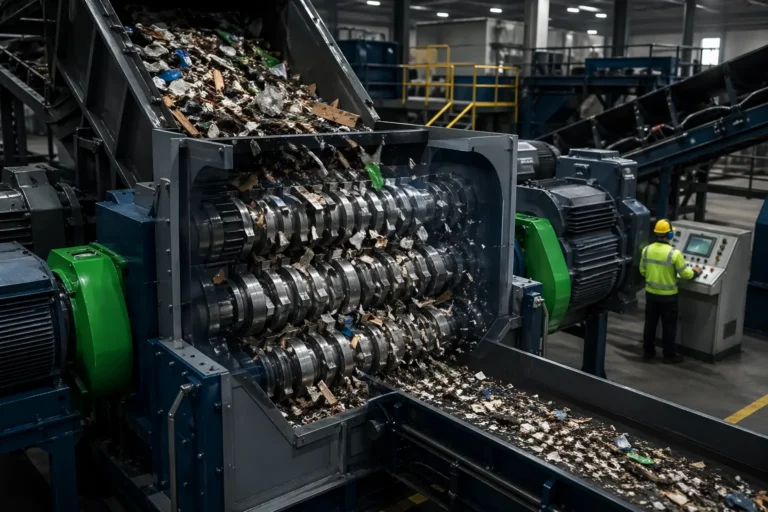
The Australian industries already have the option of single and double-shaft shredders, and there is no doubt that their popularity is increasing day by day. But as business owners expand the ventures, their waste streams become more complex. Therefore, they need to use a more capable solution to cope with the flow. This is where quad shaft shredders come in handy. They bring precision, power, and size control that their predecessors simply cannot match when handling high-volume, mixed materials. But besides this, there is so much more to know about them. So, in this blog, we will break down which industries need them, how they actually work, and why they matter.
Overview Of Quad Shaft Shredders OperationsQuad shaft shredders are modern waste processing machines that are made to handle high-volume, mixed, and difficult materials with precision. They use a four-shaft system, which is perfect for industries like recycling, construction, e-waste, and manufacturing. Their ability to give consistent output improves downstream recovery, compliance, and overall waste management performance. |
Different Industry Types & Their Waste Disposal Needs
Recycling & Resource Recovery
The material recovery facilities across Australia process materials through automated sorting lines. It includes:
- Co-mingled plastics
- Paper
- Metals
- Glass
Therefore, they use a quad shaft industrial shredder to handle these mixed inbound materials and deliver uniform, consistently sized output. This ensures that the downstream sorting equipment receives fragments it can actually process without stoppages or contaminated batches affecting recovery rates.
Construction & Demolition
By far the largest amount of waste generated is by the C&D industry only. Thus, quad shaft shredders reduce their heavy waste by simultaneously cutting, tearing, and shearing mixed materials into smaller,
uniform fragments, drastically shrinking volume for easier recycling or disposal. This directly helps businesses meet landfill diversion targets under NSW waste levies, among the highest in Australia. The shredders are used for materials like:
- Timber offcuts
- Plasterboard
- Insulation
- Mixed site Debris.
E-Waste Processing
It is also a very important component used by licensed e-waste processors operating under Australia’s National Television and Computer Recycling Scheme. They daily handle:
- Computers
- Circuit boards
- Hard drives
- Consumer Electronics
- Televisions
Unlike single- or dual-shaft industrial shredder types, quad shaft machines handle this variety of mixed materials in a single pass. This means the shredders fulfil the disposal need here by reducing mixed electronic assemblies into consistently sized fragments, liberating copper, aluminium, and precious metals for maximum recovery value.
Healthcare & Medical Waste
Every hospital, pathology laboratory, aged care facility, and pharmaceutical manufacturers require traceable, fully compliant destruction of waste. It includes:
- Clinical waste
- Expired medications
- Contaminated packaging
So, that’s exactly why you should opt for a waste management quad shaft shredder, as they completely destroy all identifiable material, meet AS clinical waste standards, and eliminate any risk of non-compliant material leaving the facility intact.
Organics & Food Waste
The organics recycling role in C&I waste management is growing rapidly across Australian commercial and industrial operations. Quad shaft shredders support this stream by pre-processing bulky organic waste, such as
- Food production offcuts
- Packaging mixed with organics
- Compostable industrial materials
These are turned into consistently sized fragments that composting and anaerobic digestion facilities can actually accept and process efficiently.
How Does a Quard Shaft Shredder Work in Waste Disposal?
Here’s how the quard shaft shredder works for the waste disposal process:
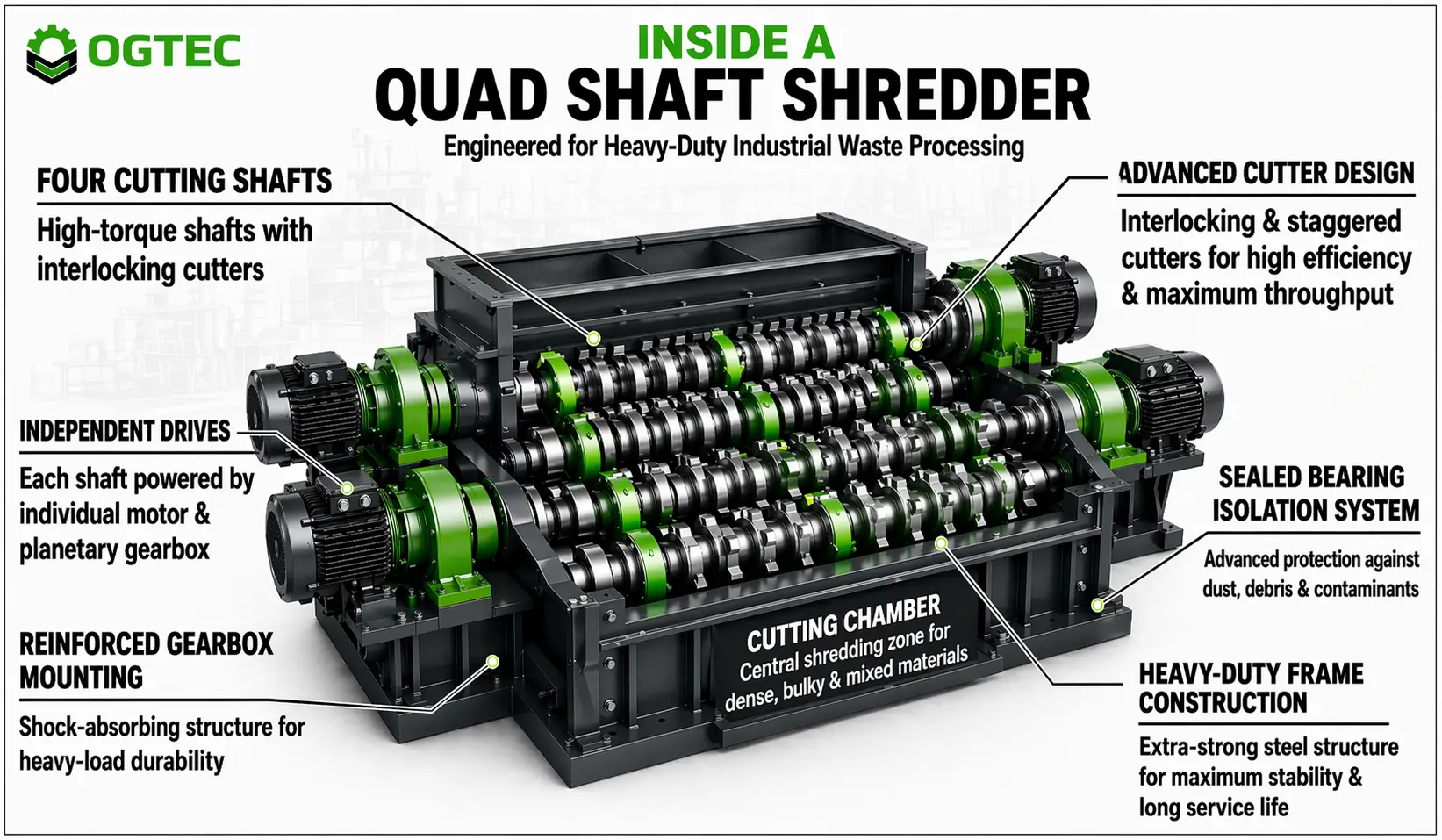
Step 1: Waste Goes In, and the Machine Takes Over
First, the waste material is fed into the cutting chamber through an application-specific hopper. The two upper shafts of the quad shaft industrial shredder, rotating inward toward the centre, actively pull material downward into the cutting zone. This pull-in mechanism means the machine does not require a hydraulic pusher system, which reduces complexity and maintenance overhead.
Step 2: The First Cut — Breaking Material Down
The upper two shafts spin toward each other at low speed and begin tearing the material apart. Because they move slowly but with great force, the machine tears through tough materials like metal and dense plastic without generating excessive heat, noise, or dust.
Step 3: The Second Cut — Getting the Size Right
After the upper shafts finish their job, the material drops straight down to the lower two shafts, which cut it further. These four shafts working together are what make the quad shaft machine genuinely different, as material gets two full rounds of cutting before it can go anywhere.
Step 4: Nothing Leaves Until It Is the Right Size
Now, below all four shafts is a removable sizing screen with a fixed hole size. If a piece of material is still too big to fit through, it simply stays inside and gets processed again until it is small enough. This means nothing goes out of the waste management quad shaft shredder in a large size.
Step 5: Proper Particle Discharge
Once material is small enough to pass through the screen, it drops out onto a conveyor or collection system below and moves on to the next stage of processing. The machine connects easily with other equipment, like conveyors, sorters, and balers. It is indeed a natural fit inside fully automated Australian recycling and recovery facilities, clearly reflecting the waste management importance in the industrial sector.
Step 6: Jams Sort Themselves Out On Their Own
If something too hard or too large enters the machine and causes resistance, the quad shaft shredders do not break down. Its built-in PLC control system detects the blockage instantly, reverses the shafts briefly to clear it, and then continues running forward without anyone stepping in. In short, no babysitting required.
Conclusion
For every Australian business facing tight waste regulations, stricter output specifications, and rising disposal costs, the precision this technology delivers is a worthy investment to make. If you are considering getting it for your facility, check out OGTEC’s full collection of industrial shredders. With more than 10 years of experience, we help businesses achieve compliant and high-performance material recovery.
We turn your waste chaos into clean output. Begin this process today and contact us for more information.
FAQ’s
What maintenance does a quad shaft shredder require?
It needs daily cutter inspections, weekly bearing lubrication, and periodic blade rotation or replacement.
How do I choose the right screen size for my application?
It depends on what you need the output for. If material is going into a sorting or separation system, go with a finer screen; if you just need to reduce bulk before disposal, a coarser screen does the job.
How long do the shredder’s blades typically last?
They roughly last for about 2,000–4,000 hours, depending on material hardness and operational feed consistency.
Can both metal and plastic be processed in a single batch?
Yes, its high-torque design handles mixed material streams without jamming between passes.
What is the lifespan of a quad shaft shredder?
If you regularly service them, most industrial quad shaft shredders operate reliably for 15 to 20 years.