Waste Tyres And Environmental Pollution: Can Industrial Recycling Provide A Long-Term Solution?
access_time12/11/2025
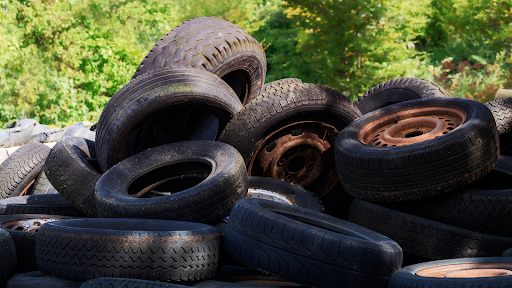
Tyres are made from highly durable synthetic materials, including non-renewable components such as rubber, carbon black, and steel. As these materials are non-biodegradable, discarded tyres do not decompose naturally, posing environmental challenges. To address this, the waste tyre recycling industry has grown rapidly, offering solutions that reduce environmental harm and convert tyres into valuable resources for construction, industrial applications, and other sectors. Today, the industry is growing with the latest market trends, ESG-driven initiatives, and growing investments in environmentally responsible practices. But what exactly are these developments, and how do they contribute to long-term sustainability? Before exploring these solutions, it is important to first understand the environmental impact of tyres and why effective waste tyre recycling is essential.
How Waste Tyres Are Polluting The Environment In Different Ways
1. Land Pollution
- Non-biodegradability: Tyres are made of synthetic rubber, steel, and other chemicals that do not break down naturally. When dumped, they stay in landfills or open spaces for hundreds of years, taking up valuable land that could be used for farming, housing, or forests. Instead of letting tyres accumulate in landfills, proper collection through skip bin recycling or organic recycling can help manage waste efficiently and reduce land pollution.
- Leaching of toxic chemicals: Tyres slowly release metals like zinc and cadmium, as well as oils and additives, into the soil. These substances reduce soil fertility and harm microorganisms, affecting plant growth and the natural balance of the land.
2. Water Pollution
- Chemical runoff: Rainwater can wash chemicals from tyre piles into rivers, lakes, or groundwater. Metals and oils in the tyres poison fish, aquatic plants, and other water organisms, disrupting ecosystems and contaminating drinking water.
- Breeding grounds for mosquitoes: Tyres collect rainwater and create stagnant pools that attract mosquitoes. These insects spread diseases such as dengue, malaria, and Zika, impacting human and animal health.
3. Air And Fire Hazards
Tyres are extremely flammable, and when large piles catch fire, they can burn for days, releasing intense heat that melts nearby surfaces and damages surrounding areas. As they burn, they produce thick black smoke filled with toxic gases such as carbon monoxide, sulphur dioxide, nitrogen oxides, and volatile organic compounds. Fine soot and ash particles from these fires can travel long distances through the air, settling on soil, water sources, and crops, leading to widespread environmental contamination. Exposure to these pollutants can irritate the eyes, damage the respiratory system, and pose serious long-term health risks for communities living in proximity to tyre fires.4. Visual And Ecological Impact
Piles of discarded tyres create an unpleasant and unnatural appearance in landscapes, reducing the beauty of parks, forests, and urban areas. Beyond being an eyesore, these tyre heaps provide shelter for rodents, insects, and other pests, which can upset local ecosystems and spread diseases to humans and wildlife. This combination of visual disruption and ecological imbalance highlights the far-reaching consequences of improper tyre disposal on both nature and human communities.How Industrial Recycling Equipment Tackles The Problem
Modern tyre processing equipment plays a vital role in industrial waste management, enabling efficient separation, sorting, and transformation of materials into new industrial products. Check out the key machines and technologies below that make industrial tyre recycling effective and sustainable.- Tyre Shredders (Primary & Secondary): These are specially designed to handle whole vehicle tyres, including the tough rubber and embedded steel rims. Primary shredders cut tyres into large blocks, while secondary shredders reduce those blocks into smaller chunks suitable for processing. Adjustable blade configurations allow shredders to manage different tyre sizes, from passenger car tyres to truck tyres.
- Raspers: After primary shredding, rasper machines take larger tyre chunks and further reduce them to smaller, uniform sizes, typically around 10–20 mm. This step downsizes the rubber and liberates embedded steel and fibres, ensuring smoother downstream processing. By controlling particle size at this stage, raspers improve granulator efficiency, reduce wear on machinery, and help produce high-quality recycled rubber suitable for various industrial applications.
- Magnetic Separators / Magnets: Tyres contain steel wires in their belts and bead areas. Magnetic separators remove this steel from shredded tyres efficiently, preventing damage to downstream tyre recycling equipment. The recovered steel from tyres is recycled into construction materials or automotive products.
- Granulators / Hammermills: These take shredded tyre chunks and grind them into crumb rubber. Screens inside these machines control particle size, ensuring tyre rubber can be reused in applications like playground mats, sports tracks, or modified asphalt. Some hammermills apply rapid impact forces that break down tyre rubber without damaging embedded fibres.
- Screens / Disk Screens: After shredding, tyres are passed over screens to sort rubber particles by size. Disk screens and perforated plates allow only appropriately sized tyre granules to pass through, while oversized chunks are returned for further processing, producing consistent material for tyre-derived products.
- Aspirators: These use controlled airflow to separate lightweight fibres, dust, and other fine impurities from shredded or granulated tyre material. Tyre components such as polyester or nylon fibres are lifted away, while heavier rubber and steel continue through processing. This ensures that the reclaimed rubber is clean, consistent, and ready for use in products like playground mats, sports tracks, or modified asphalt, while protecting downstream tyre recycling equipment from contamination.
- Bagging / Packaging Systems: These systems automate the process of filling, weighing, and sealing shredded, granulated, or powdered tyre rubber into bags. They maintain consistent portion sizes, reduce manual handling, and prevent spillage, ensuring safe and efficient storage or transport. By streamlining the packaging process, packaging systems help recycling facilities manage large volumes of material effectively while preserving the quality and usability of tyre-derived products.
- Pyrolysis Plants: Pyrolysis plants process whole or shredded tyres by heating them in oxygen-free chambers. The heat breaks down tyre rubber into smaller molecules, producing oil, gas, and carbon black that can be used as fuel or raw materials for industrial applications, converting tyres into reusable resources.
- Rubber Milling Machines: Rubber milling machines refine granulated tyre rubber into powders or sheets. By adjusting roller spacing and speed, operators produce uniform tyre rubber material suitable for manufacturing new tyres, mats, or moulded rubber products, completing the waste tyre recycling cycle.
- Crushers / Pulverisers target tyre pieces, applying compressive and shear forces to produce fine rubber powder. By adjusting rollers or crushing plates, operators can control how tyre material is reduced, making it suitable for moulding new tyres, rubber mats, or industrial coatings.
- Tire Baling Machines / Balers: Once tyre material is shredded, balers compress it into dense, uniform bales. This reduces storage space, simplifies handling, and allows safe transport of large volumes of shredded tyres to recycling or energy recovery facilities.