Understanding The Different Industrial Waste Streams
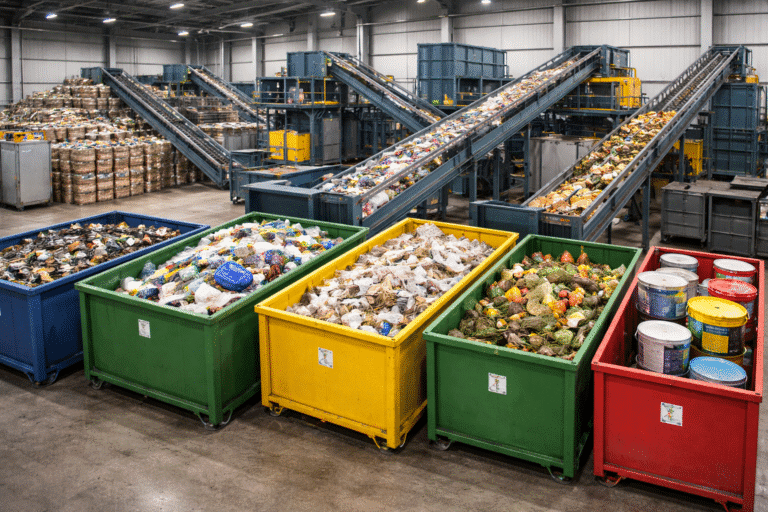
Industrial facilities generate vast amounts of waste every year. For facility managers and Environmental, Health, and Safety (EHS) officers, correctly classifying this material is essential for compliance, safety, and operational efficiency. Mismanagement doesn’t just look bad on a report; it can lead to heavy regulatory fines, severe environmental harm, and genuine physical risks to employees.
The Importance of Industrial Waste Management extends beyond disposal. It begins with understanding the technical characteristics of each waste stream is the first step toward responsible and efficient waste management. It is not enough to simply remove waste from the premises; you must understand its chemical and physical properties to determine its final destination. Whether you are dealing with inert construction debris or highly reactive chemical byproducts, every material requires a specific protocol.
This article explores the main types of industrial waste streams, their defining features, and the strategies required to handle, store, and dispose of them safely.
Overview of Sustainable Waste Management PracticesEffective waste management relies on proper identification, segregation, and handling of waste streams to optimize sustainability and compliance. By understanding the physical and chemical properties of waste, facilities can reduce reliance on landfills, instead prioritizing reuse, reclamation, or energy recovery. Regular waste audits play a crucial role in minimizing contamination, enhancing compliance, and identifying efficiencies that benefit both operational costs and environmental health. Adopting these practices not only streamlines waste processes but also aligns organizations with higher environmental stewardship standards, contributing to a more sustainable future. |
Classifying Different Industrial Waste Streams
Solid Industrial Waste (Non-Hazardous)
This category often constitutes the bulk of a facility’s waste volume but poses the least immediate threat to human health or the environment. However, “non-hazardous” does not mean “unregulated.” These materials must still be handled according to state and local solid waste management plans.
Solid industrial waste includes:
- Process Waste: Inorganic sludge, ash, grit, or slag generated from thermal processes or water treatment. While often inert, these materials require specific landfilling protocols to prevent particulate dispersion.
- Packaging Materials: High-volume cardboard, plastics, and wood pallets. This stream offers the highest potential for diversion through recycling programs.
- Construction and Demolition (C&D) Debris: Concrete, gypsum, bricks, and lumber generated during facility expansion or renovation.
Transfer stations are often used for solid industrial waste to consolidate materials from multiple sources before recycling, treatment, or final disposal. These stations improve logistics efficiency and reduce the environmental footprint of transporting waste long distances.
Liquid Industrial Waste
Liquid waste streams present a higher risk of environmental contamination due to their mobility and are considered one of the most complex types of industrial waste stream to manage. If mishandled, liquid waste can enter storm drains, groundwater, or local waterways. This category is generally divided into two sub-sectors: point-source discharge and containment liquids.
- Wastewater and Effluent: Water used in manufacturing processes often becomes contaminated with oils, chemicals, or organic matter. Before this water can be discharged into a municipal sewer system, it usually requires on-site pre-treatment to lower Biological Oxygen Demand (BOD) and remove suspended solids.
- Grease, Oils, and Lubricants: Used motor oils and hydraulic fluids must be separated from wastewater. Many of these petroleum-based liquids can be re-refined, turning a waste stream into a recovered resource.
- Sludge: This is the semi-solid residue left over from water treatment or industrial dipping processes. Sludge management often involves dewatering, removing the liquid content to reduce the weight, before the remaining solid cake is sent for disposal.
Hazardous Waste
Hazardous waste is one of the most strictly regulated types of industrial waste stream under frameworks like the Resource Conservation and Recovery Act (RCRA) in the United States. This waste is defined by its potential to cause harm to human health or the environment.
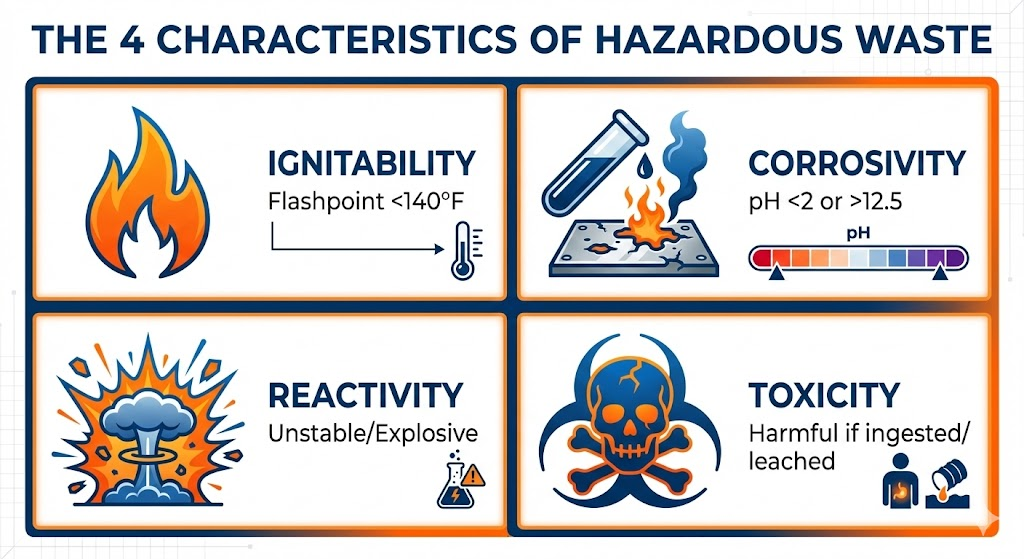
A material is classified as hazardous if it appears on specific EPA lists (F, K, P, and U lists) or if it exhibits one of the following four characteristics:
- Ignitability: Liquids with a flashpoint below 60°C (140°F) or non-liquids that can cause fire through friction or absorption of moisture. Examples include waste solvents and paints.
- Corrosivity: Aqueous substances with a pH less than or equal to 2 (highly acidic) or greater than or equal to 12.5 (highly basic). Battery acid and rust removers fall into this category.
- Reactivity: Materials that are unstable under normal conditions. They may cause explosions, generate toxic fumes (like cyanide or sulfide) when mixed with water, or detonate when heated.
- Toxicity: Wastes that can be fatal or harmful when ingested or absorbed. If a waste contains contaminants like lead, mercury, or benzene above specific regulatory levels, it is toxic.
Universal Waste
Universal waste is a specific subset of hazardous waste that is so common across different industries that regulations have been streamlined to encourage recycling. The goal is to keep these items out of standard municipal landfills without burdening businesses with full hazardous waste compliance for minor items.
Common universal waste streams include:
- Batteries: Lithium-ion, nickel-cadmium, and lead-acid batteries.
- Pesticides: Recalled or unused stocks that are being collected for disposal.
- Mercury-Containing Equipment: Thermostats, barometers, and switches.
- Lamps: Fluorescent tubes and high-intensity discharge lamps that contain mercury vapor.
Chemical Waste and Solvents
While often overlapping with hazardous waste, chemical waste deserves specific attention due to the complexity of disposal. Common types include:
- Lab packs: Small containers of various chemicals generated in laboratory operations
- Spent solvents: Used in degreasing, cleaning, or industrial processes
- Unused chemical feedstock: Excess or off-spec raw chemicals from manufacturing
Management often involves fuel blending, incineration, or neutralization to make chemicals inert. These are some of the common industrial waste recycling types & methods applied in modern facilities, where high-BTU liquid wastes are blended to fuel cement kilns, or incineration, which destroys the chemical bonds. Neutralization, mixing acids with bases to render them inert, is another common treatment method for specific chemical streams.
Moving Toward Zero-Waste Operations
Understanding the properties of your waste streams is key to moving beyond landfill disposal. Accurate segregation reveals opportunities for reuse, recycling, and energy recovery. OGTEC provides commercial and industrial waste management solutions, including advanced sorting, processing, and resource recovery systems for industrial, commercial, and co-mingled waste. Our technologies help facilities maximise recycling, reduce landfill reliance, and achieve compliance while improving efficiency and cost-effectiveness. Take the first step toward a zero-waste facility, partner with OGTEC!
Frequently Asked Questions
What is considered hazardous industrial waste?
Hazardous industrial waste is any by-product threatening health or the environment, either listed by regulators or defined by ignitability, corrosivity, reactivity, or toxicity characteristics under environmental protection laws and compliance standards.
Can different waste streams be mixed together?
No, mixing waste streams is prohibited because combining hazardous and non-hazardous materials can make all waste hazardous and may trigger dangerous reactions, toxic gas release, fires, or explosions during handling.
Which industrial waste streams are easiest to recycle?
The easiest industrial waste to recycle includes clean, segregated metals, cardboard, untreated wood, and sorted plastics, since they have established markets, processing infrastructure, and minimal contamination challenges for recycling programs.