Role of Organics Recycling in C&I Waste Management
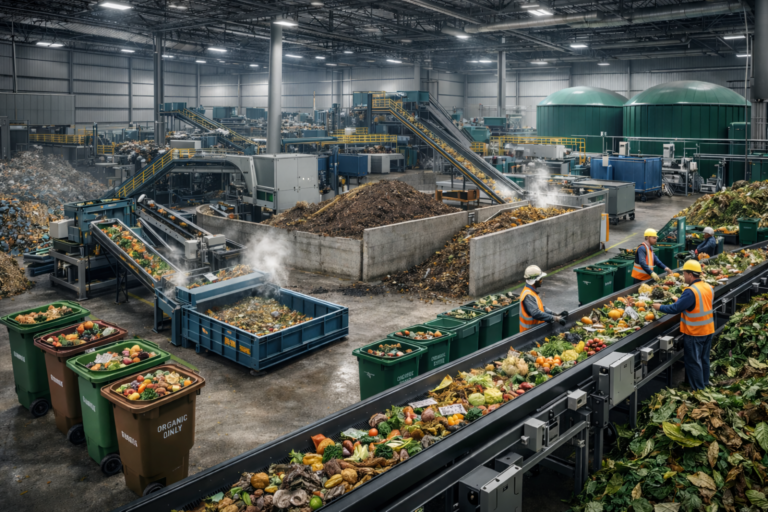
The commercial and industrial (C&I) sector generates a staggering volume of waste annually. While much attention is often placed on construction debris or rigid plastics, a good portion of this stream consists of organic material. From food processing residues to timber offcuts and green waste, C&I organics represent a critical opportunity for businesses to pivot from a linear disposal model to a circular, resource-recovery framework.
Effective management of these streams is not merely a regulatory compliance exercise; it is a strategic operational imperative. By diverting organic waste from landfills, businesses can significantly reduce disposal costs, lower their carbon footprint, and contribute to the production of valuable by-products like biofuel, compost, and stockfeed. However, the complexity of C&I waste streams, often characterised by high contamination rates and variable compositions, requires sophisticated engineering solutions.
This blog post explores the technical role of organic recycling solutions within the C&I sector, examining how advanced processing technologies can be integrated into existing waste systems to maximise recovery and operational efficiency.
Overview of Organics in C&I WasteThe C&I sector is currently under-utilising a massive resource, organic waste. Unlike predictable residential waste, commercial organics are diverse, ranging from wet food sludge to dry timber. Recycling this material requires specific technological interventions, primarily to handle high contamination rates from packaging and non-organic debris. By implementing advanced separation technologies (like optical sorters) and processing methods (like anaerobic digestion), businesses can transform liability into assets, namely energy and soil products, while insulating themselves from rising landfill levies |
What is the Role of Organics Recycling in C&I Waste Management?
Waste Stream Diversion
The primary role of organic recycling is to reduce landfill volume at the disposal point. Organic waste is dense and heavy, so diverting it significantly reduces the residual waste load. For C&I operators, commercial organic recycling is often the first step toward zero-waste-to-landfill targets, transforming waste management from a disposal challenge into a feedstock recovery opportunity.
Regulatory Compliance
Governments globally are tightening regulations regarding organic waste in landfills due to methane production. Many jurisdictions are implementing bans on organic waste in general landfills or mandating source separation. Robust recycling protocols ensure C&I businesses remain compliant with these evolving statutory requirements, avoiding potential fines and legal complications.
Cost Optimization
Landfill tipping fees are rising exponentially, often driven by government levies designed to discourage disposal. Conversely, gate fees for organic processing facilities are typically lower. Furthermore, by segregating organics, businesses reduce the weight of their general waste bins, leading to direct savings in haulage and disposal fees.
Brand and Stakeholder Value
Sustainability is a measurable metric for stakeholders. Demonstrating a closed-loop system where waste is converted into energy or compost enhances corporate social responsibility (CSR) profiles. It signals to investors and clients that the business is forward-thinking and operationally efficient.
Energy Production
Perhaps the most sophisticated role of C&I organics is energy generation. Through anaerobic digestion, organic waste becomes a renewable energy source. This allows industrial facilities to potentially offset their own energy consumption using the very waste they generate, creating a self-sustaining energy loop.
Integrating Organics Recycling Into C&I Waste Systems
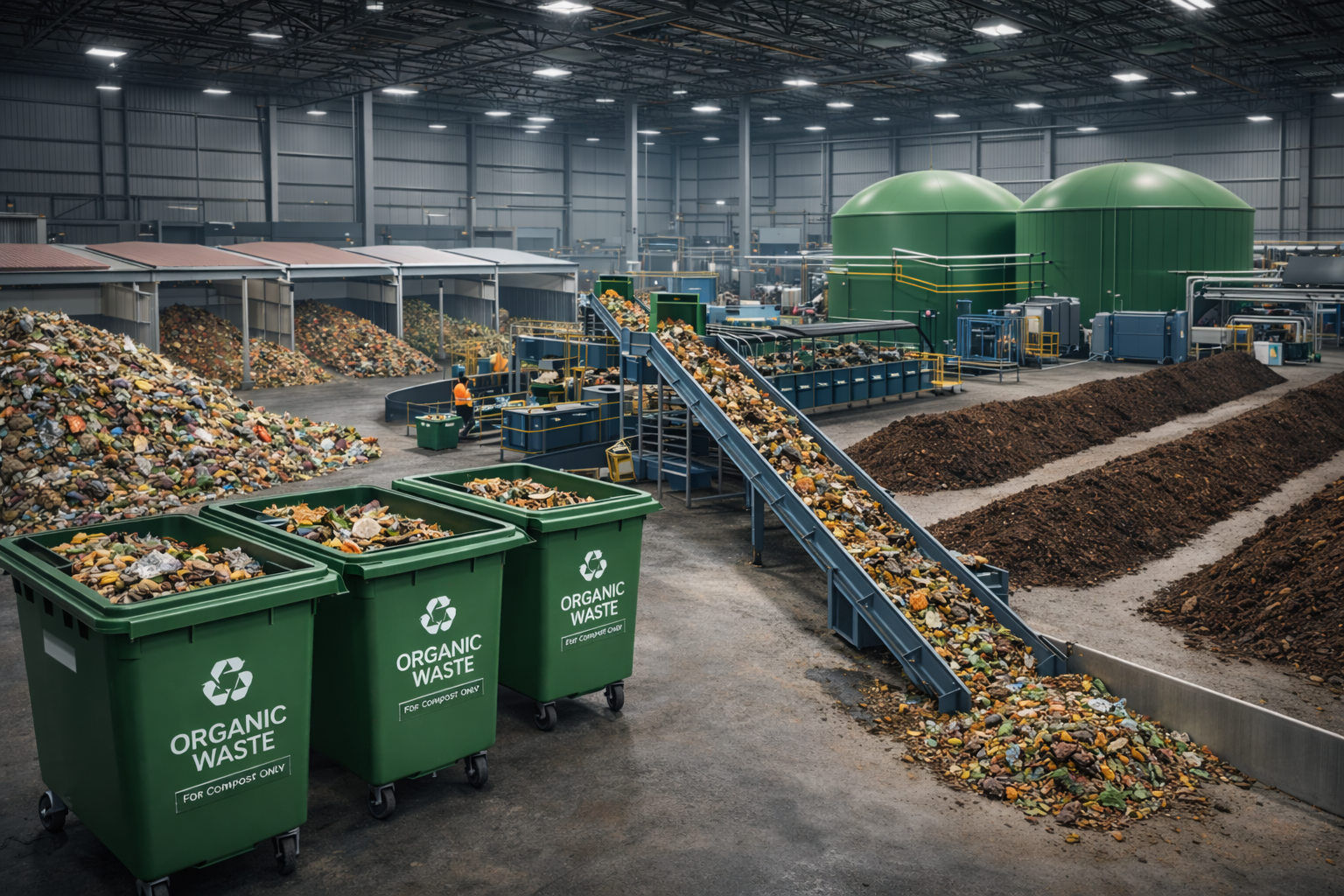
The successful integration of industrial organic recycling into C&I waste management relies heavily on the deployment of advanced technological advancements in recycling. Simply collecting organic waste is insufficient; it must be processed to a high degree of purity to be commercially viable. This requires a systems-based approach where mechanical pre-treatment and automated sorting work in tandem.
Front-End Separation and Decontamination
One of the most significant barriers to effective commercial organic recycling is contamination. In C&I streams, organics are frequently co-mingled with plastics, glass, and metals. To address this challenge, modern recovery facilities utilise a suite of separation technologies as part of integrated commercial and industrial waste management solutions that are designed to handle complex, high-volume waste streams.
- Trommels and Disk Screens: These mechanical screens separate materials based on size and density. They are particularly effective for removing fine contaminants (like grit or glass shards) from compost or separating oversized inorganic items from the organic stream.
- Eddy Current and Magnetic Separators: These are critical for protecting downstream equipment and ensuring product purity. Magnetic separators remove ferrous metals, while eddy currents eject non-ferrous metals like aluminium cans that may have entered the organic stream.
- Optical Sorters: For high-volume facilities, Near-Infrared (NIR) optical sorters offer the highest level of precision. These automated systems can identify and eject synthetic polymers (plastics) from the organic stream with remarkable speed, significantly reducing the labour required for manual picking and ensuring the final organic output meets strict regulatory standards for land application.
Biological Treatment and Energy Recovery
Once the organic stream has been decontaminated and sized, it moves to the treatment phase. The choice of technology depends on the material composition and the desired end-product. This decision-making process mirrors the Importance of Construction and Demolition Industry Recycling, where material characteristics and end-use requirements determine whether waste is recovered as aggregates, fuels, or reusable resources.
- Composting: This aerobic process is suitable for green waste and fibrous materials. By controlling temperature, moisture, and aeration, businesses can produce high-grade soil conditioners that support the agricultural sector.
- Anaerobic Digestion (AD): For wet organics like food sludge and fats, AD is often the preferred method. This process breaks down organic matter in the absence of oxygen, producing biogas (methane and carbon dioxide) that can be captured and used for electricity generation or upgraded to biomethane for grid injection. This aligns perfectly with circular economy principles, transforming waste into energy.
The Future of C&I Organics
The trajectory for C&I organics management is clear: landfilling is no longer a viable long-term strategy. As landfill levies rise and environmental regulations tighten, the economic case for on-site or centralised industrial organic recycling strengthens.
By investing in flexible processing lines capable of handling diverse C&I feedstocks, businesses can insulate themselves from fluctuating disposal costs and unlock new revenue streams. The technology exists to treat these complex waste streams effectively; the challenge now lies in widespread adoption and integration.
Frequently Asked Questions
What are the main contaminants in commercial organic waste?
The primary contaminants in commercial organic streams are plastics (including film and rigid packaging), glass, and metals. In C&I contexts, treated timber containing chemicals like CCA (Copper Chrome Arsenate) can also be a significant contaminant that must be segregated from clean wood waste.
How does de-packaging technology work?
De-packaging machines utilise mechanical action, such as rotating paddles or hammers, to break open packaging without shredding it into micro-particles. The organic content is then separated, often through screening or centrifugation, while the packaging is ejected as a separate stream. This allows food manufacturers to recycle large volumes of packaged stock that would otherwise go to landfill.
Can C&I organic waste be used for energy generation?
Yes. Wet organic waste is an ideal feedstock for anaerobic digestion, which produces biogas for energy. Drier organic waste, particularly timber and fibrous materials, can be processed into solid biofuels or Processed Engineered Fuel (PEF) to replace fossil fuels in industrial cement kilns and boilers.
What is the difference between aerobic and anaerobic treatment?
Aerobic treatment (composting) requires oxygen and is typically used for green waste and solid organics to produce soil amendments. Anaerobic treatment (digestion) occurs in the absence of oxygen, making it suitable for wet organics and sludges, with the primary output being energy-rich biogas and a nutrient-rich digestate.