Role of Organics Recycling in C&I Waste Management
The commercial and industrial (C&I) sector generates a staggering volume of waste annually. While much attention is often placed on
Screens are used to further separate the material into multiple material size streams which can then be further processed to produce a clean output product. Generally the screens used are rigid deck vibrating screens for the larger material and flip flow screens for the smaller fraction material.
Windshifters are used to separate the light fraction material from the heavy fraction material in after it has been screened into its size range. The windshifter uses air flow to blow the light material away from the heavy material thus increasing the quality of the heavy material.
The optical sorter uses near-infrared (NIR) technology to determine the material type( composition of the material). It detects the material type as it passes under the NIR sensor on a high-speed conveyor and then uses air to shoot the material into the correct sorting category. The optical sorter can be used for various types of materials with high precision and improves the sorted materials’ purity.
Used to remove ferrous metals (steel) from the recycling stream. Magnets are generally positioned in multiple positions through the plant to ensure as much ferrous material is removed and recovered. The magnet lifts and transfers the ferrous material out of the material stream as it passes under the magnet.

The commercial and industrial (C&I) sector generates a staggering volume of waste annually. While much attention is often placed on

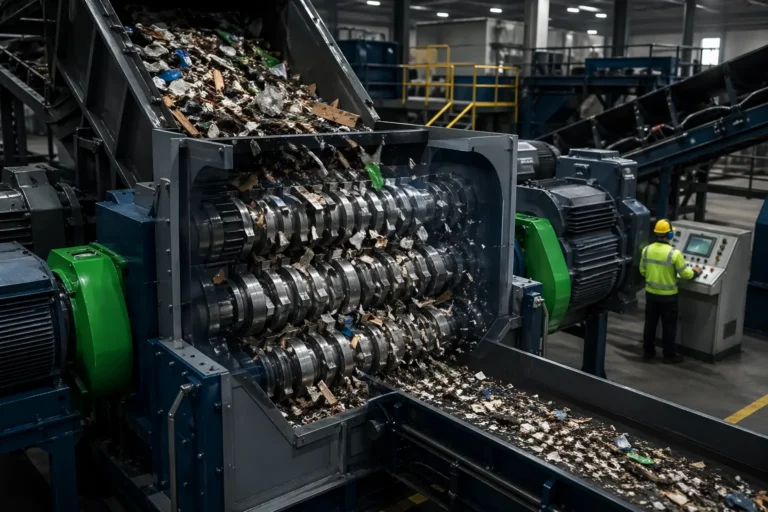
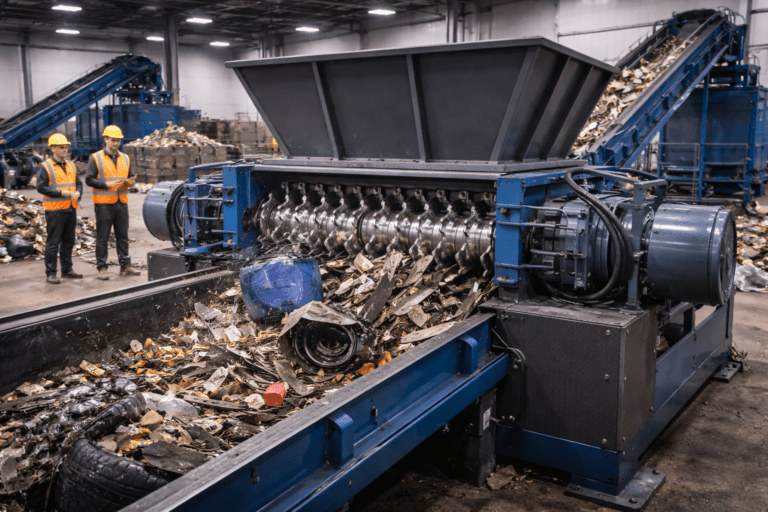
Industrial shredders are paramount in recycling, waste reduction, and raw material preparation across industries such as manufacturing, packaging, construction, and

With time, it has started to get very difficult for industrial waste systems to manage end-of-life tyres. If not mechanically

With so much waste generated by business facilities around us, compactors have been a game-changing tool to assist them. They

Every day, tons of co-mingled waste end up at recycling facilities across Australia. In the 2022–23 period alone, Australia

Tyres are made from highly durable synthetic materials, including non-renewable components such as rubber, carbon black, and steel. As these