Different Types of Industrial Shredders & Their Specifications
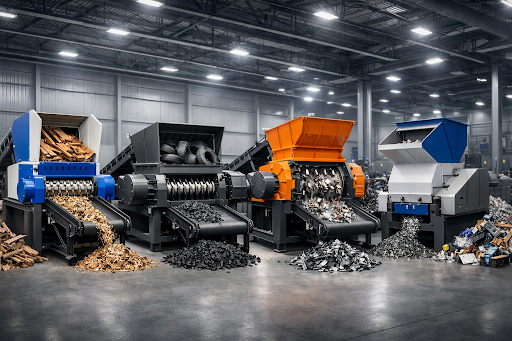
Industrial shredders are paramount in recycling, waste reduction, and raw material preparation across industries such as manufacturing, packaging, construction, and energy. These machines are designed to break down everything from plastics, rubber, and paper to metals, wood, and electronic waste into uniform, reusable sizes.
In the market, you can find different types of industrial shredders that vary widely in design, cutting technology, torque, motor power, and output capacity. Each is built for specific materials and performance needs, which we are set to discuss in this blog, helping you understand which one suits your operations the best.
Industrial Shredders: Key Takeaways OverviewIndustrial shredders play a vital role in waste processing by delivering efficient size reduction across diverse material streams. From heavy-duty primary shredders to precision-driven secondary, universal, mobile, and one-step systems, each type serves a distinct operational purpose. Key considerations such as material characteristics, output requirements, throughput, energy efficiency, mobility, and system integration ultimately determine the most effective shredding solution for reliable, long-term performance. |
Different Types Of Industrial Shredders And Their Specifications
Here are different types of industrial shredders and their specifications:
Stationary Primary Shredders
Primary shredders are the frontline machines in industrial shredders for waste management and recycling solutions, engineered to handle large, bulky, and mixed materials that are too big or too tough for fine shredders.
How they work?
These are slow-speed, high-torque shredders like the single shaft shredder, which reduce volume and break down large objects into manageable pieces. They rely on either a heavy single shaft with replaceable knives or twin counter-rotating shafts that grab and tear material apart. The low speed and high torque help avoid jams and allow shredding of contaminated, irregular waste.
Key features:
- Single-shaft models: Countershaft drive stores & releases energy, internal pusher ensures continuous feed, Plug & Go screen unit for adjustable output, robust knives handle even non-shreddables.
- Twin-shaft models: Ripping action with asynchronous drive allows continuous shredding even if one shaft stalls, and 40% lower energy consumption compared to hydraulic drives.
- High-torque electro-hydrostatic variants: Provide greater torque with power efficiency for dense or heavy materials.
Ideal applications
Municipal solid waste, bulky commercial & industrial waste (C&I), waste wood, HDPE plastics, mixed construction debris, especially where volume reduction and preparation for further processing are essential.
Stationary Secondary Shredders
Secondary shredders refine material that has already passed through a primary stage. They produce more consistent, smaller particle sizes for downstream applications like recycling or fuel production.
How they work?
Material enters a precision cutting chamber after pre-shredding. Single-shaft cutters intersect with a screen, so only pieces below a target size are discharged. The internal pusher and controlled feed produce uniform particle sizes, optimizing throughput and downstream performance.
Key features
- Precision cutting tools designed for fine shredding of previously reduced waste.
- Integrated screen units control output size for processes like RDF/RDF production.
- Internal pushers and safety clutches ensure stable feed and overload protection.
Ideal applications
Refuse-derived fuel (RDF), solid recovered fuel (SRF) preparation, plastics recycling, paper, cardboard, wood refinement, wherever uniform particle size and controlled output are required.
Stationary Universal Shredders
Universal shredders are extremely versatile machines, able to manage a wide spectrum of materials and often serve multiple roles in one system.
How they work?
Using a single‐shaft design with configurable cutting elements, universal shredders adjust to different waste inputs simply by changing knife types, screens, or speeds. This adaptability lets one machine perform coarse, medium, or fine shredding as needed.
Key features
- Mono-Fix or configurable cutting systems: Quick change of knife types for different materials.
- Heavy-duty gear or direct belt drives to handle varied loads.
- Adjustable screen sizes: Produce defined particle sizes tailored to downstream processes.
Ideal applications
Film plastics, rigid plastics, MSW, wood, paper, textiles, mixed recycling streams, especially facilities that process diverse materials with a single machine.
Mobile Shredders
Mobile shredders bring industrial shredding to the material instead of the other way around, combining on-site flexibility and heavy‐duty capability. In discussions around mobile shredders vs. stationary shredders, mobile units stand out for reducing transportation costs and enabling immediate material processing at landfills, demolition sites, or remote locations.
How they work?
Built on a tracked or wheeled chassis, mobile shredders integrate twin-shaft cutting units, powerful diesel or electric engines, and onboard hydraulics to shred material directly at the point of generation. Easy access and advanced maintenance design reduce downtime.
Key features
- Twin-shaft cutting systems for high torque and effective shredding of mixed/contaminated waste.
- Fast Exchange maintenance systems: Entire cutting units can be swapped quickly to minimise downtime.
- Tracked chassis and hydraulics for full mobility on site.
Ideal applications
Double-shaft shredders are used for construction & demolition waste, wood, domestic waste, C&I waste, green waste, mixed scrap, particularly in landfills, remote sites, or temporary facilities where material transport costs are high.
Stationary One-Step Shredders
One-step shredders streamline the waste management process by performing primary and secondary shredding in a single continuous operation, saving equipment and energy.
How they work?
These are typically single-shaft shredders configured with a large rotor and integrated screen so materials are shredded down to the target size in one pass, avoiding the need for separate machines. Their low-speed, high-torque design delivers uniform output suitable for reuse or further processing.
Key features
- Countershaft drives with energy storage double throughput and improve efficiency.
- Quick-change knives & adjustable cutting gaps support maintenance ease and consistent output.
- Heavy-duty construction for continuous 24/7 operation.
Ideal applications
Direct processing of untreated MSW, C&I waste, and bulky waste into mid-calorific RDF suitable for co-incineration or fuel use without separate primary and secondary machines.
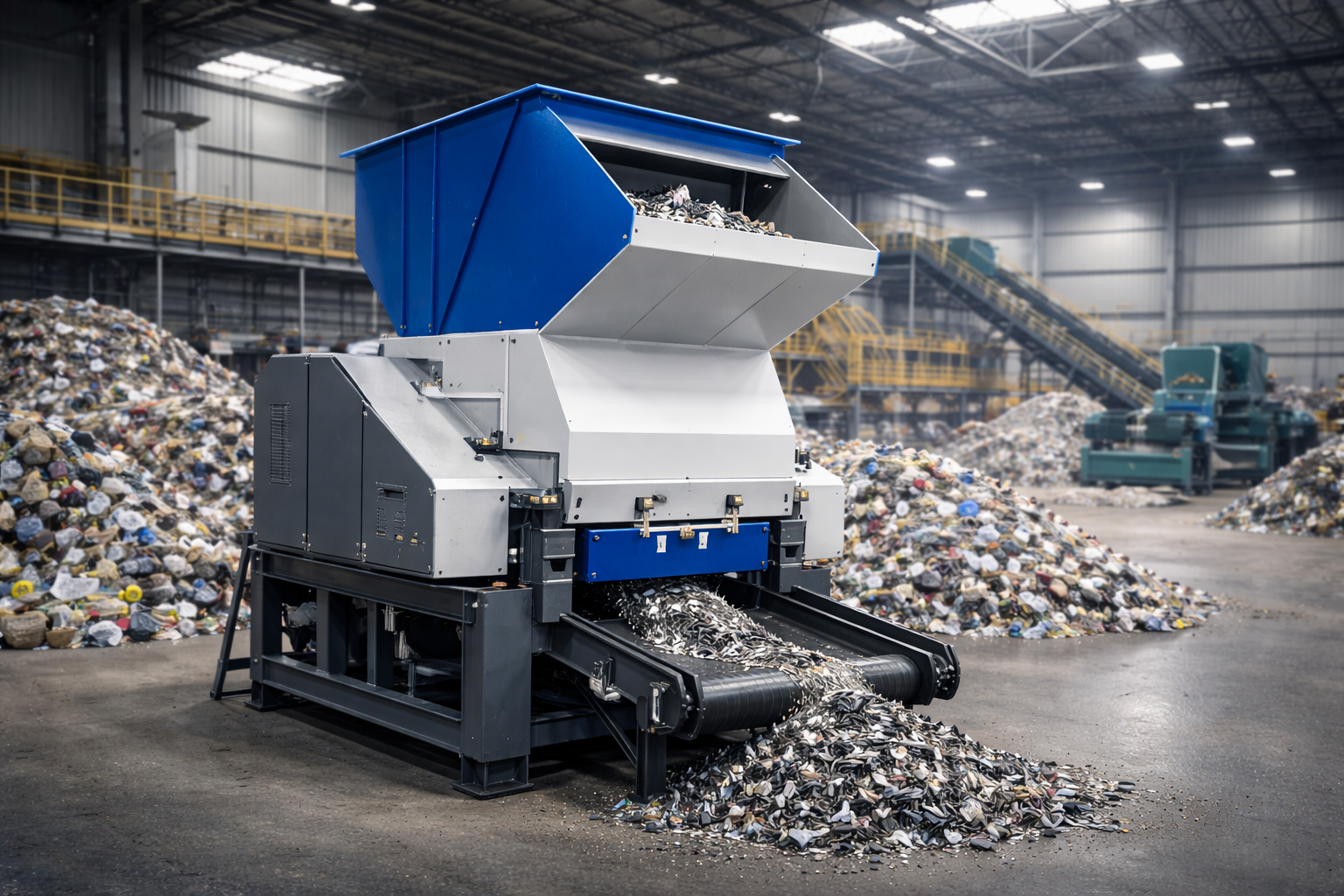
while cleaner, pre-sorted materials can be efficiently processed with single-shaft or secondary shredders.
Define the required output size and quality
The target particle size determines the shredder category. Primary shredders are suitable for coarse volume reduction, whereas secondary or one-step shredders are essential when consistent, defined output is needed for recycling or fuel production. Screen size, knife configuration, and cutting speed play a major role in achieving the desired result.
Match throughput and duty cycle to your operation
Consider how much material you need to process per hour and wheChoosing the Right Shredder for Your Business Needs
Understand your material characteristics in detail
Start by evaluating the type, size, density, and contamination level of the materials you plan to shred. Mixed municipal waste, bulky wood, plastics, or light scrap all behave differently under load. Tough, irregular, or contaminated materials typically require slow-speed, high-torque primary or double-shaft shredders, ther the single, double, or Quad shaft shredder will run intermittently or continuously. High-capacity, 24/7 operations demand robust stationary shredders with energy-efficient drive systems and wear-resistant components to ensure reliability and minimal downtime.
Evaluate energy efficiency and available power infrastructure
Choose between electric, diesel, or hybrid shredders based on site power availability and operating costs. Advanced drive technologies such as countershaft drives, electro-hydrostatic systems, or energy recovery mechanisms can significantly reduce energy consumption while maintaining high torque. Many modern systems benefit from technological advancements in recycling, such as energy recovery drives, intelligent load control, and automation, which significantly reduce energy consumption while maintaining high torque.
Plan for maintenance, safety, and long-term flexibility
Select a shredder with easy access to wear parts, safety clutches, and fast-exchange systems to reduce maintenance time. If your material mix may change in the future, opting for a universal or adaptable shredder, such as a Quad shaft shredder, ensures long-term operational flexibility and protects your investment.
Conclusion
Selecting the right industrial shredder is a strategic investment that directly impacts productivity, operating costs, and long-term sustainability. With the right expertise, even complex waste challenges can be turned into efficient, value-driven processes. OGTEC supports this journey by offering industry-proven shredding solutions, technical guidance, and end-to-end support tailored to your operational goals. Partnering with us ensures your shredding system is not just powerful, but future-ready. Click here to learn more and contact our team!
FAQs
Can one shredder be customised for multiple materials?
Yes, many shredders allow customisation through interchangeable knives, adjustable screens, variable speeds, and software settings to adapt to evolving material streams.
What safety systems are essential in industrial shredders?
Critical safety features include emergency stops, overload protection, safety clutches, automatic reversal, guarding, and intelligent control systems to prevent mechanical damage and operator risk.
Can industrial shredders be fully automated?
Yes, modern shredders support automation through PLC controls, load sensing, remote monitoring, and integration with conveyors, separators, and downstream processing equipment.
What equipment is typically used alongside shredders?
Shredders are commonly paired with conveyors, magnetic separators, screens, air classifiers, and balers to form efficient, fully integrated waste processing systems.