Decoding Co-Mingled Waste: The Key Role of Advanced Industrial Recycling Techniques
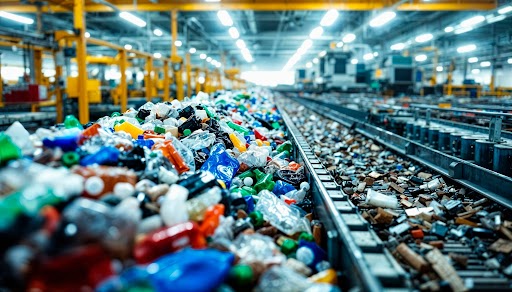
Every day, tons of co-mingled waste end up at recycling facilities across Australia. In the 2022–23 period alone, Australia generated approximately 75.6 million tonnes (Mt) of waste, about 2.88 tonnes per person, across municipal, commercial/industrial, and construction/demolition streams. Managing this diverse mix poses one of the most significant challenges in modern waste management, as traditional recycling systems struggle to separate and process such complex material streams efficiently.
To tackle this, recycling facilities are turning to advanced industrial recycling technologies, including AI-enabled optical sorting, chemical recycling, and other cutting-edge systems. These innovations enhance material identification and segregation, reduce contamination, and significantly cut landfill dependency.
But the question how do they achieve this? Well, in this article, we’ll explore how these technological advancements are reshaping co-mingled waste management across Australia and driving the nation closer to a truly circular economy.
What Is Co-Mingled Waste?
Co-mingled waste refers to a mixed stream of recyclable materials, such as plastics, paper, cardboard, metals, and glass, collected together in a single recycling bin. Unlike source-separated recycling, where materials are sorted at the point of disposal, certain recycling systems rely on material recovery facilities (MRFs) to separate and process the contents using advanced sorting technologies like optical scanners, magnets, and air classifiers, and then they eventually go through an industrial shredder for processing.
Key Challenges in Recycling Co-Mingled Waste
High contamination rates
Co-mingled streams frequently contain food residue, soft/film plastics, nappies, and hazardous items that contaminate entire batches. Australian audits and council reports reference average kerbside contamination in the low-to-mid teens (around ~12–15% in many local audits), while industry summaries warn contamination can cause up to ~30–35% of diverted recyclables to be rejected or lost to landfill in some systems. These losses reduce material quality and market value and increase processing costs.
Glass Breakage and Contamination of Other Streams
When glass containers are mixed with other recyclables, they break during transport and processing. Shards embed in paper, plastics, and metals, creating cross-contamination that is difficult to remove. Paper mills reject fibre with embedded glass because it damages pulping equipment and reduces product quality. Broken glass also abrades conveyor belts and screens, increasing maintenance costs.
Flexible Plastics and Film Entanglement
Plastic bags, wraps, and films cause major disruptions at recycling facilities. These lightweight materials tangle around screens, shafts, and belts, forcing shutdowns for manual removal. Each stoppage increases labour and equipment downtime, reducing processing efficiency. Films also contaminate other bales, lowering purity and resale value. Most Materials Recovery Facilities (MRFs) are not equipped to process plastic films, and there is limited demand for these materials in recycling markets. As a result, it is often less expensive for businesses to dispose of film in landfills rather than attempt to recycle it. As a result, film plastics represent both a technical and economic burden for facilities.
Limitations of Sorting Technology
Sorting technologies like optical sensors and near-infrared detectors struggle with dirty, dark, or multi-layer packaging. Food residue, moisture, and labels interfere with sensor accuracy, leading to frequent mis-sorting. When mixed materials end up in the wrong streams, bale purity falls, and manual quality checks are required, increasing labour costs. Even advanced AI and robotic systems rely on consistent, clean inputs, which single-stream recycling rarely provides. This technological mismatch reduces automation benefits and forces MRFs to rely heavily on human oversight.
Variability of Input Streams
The composition of co-mingled recyclables fluctuates with seasons, consumer behaviour, and packaging trends. For instance, wet paper during rainy months or holiday surges in plastics can disrupt processing efficiency. Equipment calibrated for a specific mix must be constantly adjusted, slowing operations. Sudden spikes in contamination or lightweight materials reduce throughput and increase residue. Predicting feedstock quality becomes difficult, complicating staffing and maintenance planning.
Advanced Industrial Recycling Techniques
Infeed System (Feeding and Pre-Sorting Stage)
The infeed system is the starting point of material flow into a MRF. It typically includes conveyors, metering drums, and bag openers that regulate the incoming co-mingled waste stream to ensure an even, consistent feed rate. Advanced infeed waste solutions now use variable-speed conveyors, load sensors, and automated bag splitters to prevent clumping and surges. This smooth, controlled input reduces mechanical stress downstream, minimises jamming, and improves the performance of screens and optical sorters. Some facilities integrate visual or AI-based monitoring here to track contamination rates in real time.
Primary Mechanical Separation
After the waste enters the system, mechanical separation begins. This stage removes bulky and distinct materials like cardboard and glass early on, preventing contamination and improving efficiency later in the line. The two most advanced co-mingled recycling separation techniques include:
OCC Screen (Old Corrugated Cardboard Screen)
These screens separate large flat cardboard from smaller containers using rotating discs or rubber stars. The design allows cardboard to travel upward while smaller items fall through. Modern OCC screens include anti-wrapping shafts and adjustable disc spacing to handle flexible plastics and reduce film tangling. Early removal of cardboard prevents contamination from glass and plastics, preserving the fibre quality for reuse.
Glass Breaker Screen
The glass breaker screen isolates broken glass fragments from the rest of the recyclables. It uses steel discs or paddles that allow small, heavy pieces of glass to drop through while lighter materials continue along the conveyor. Advanced versions include vacuum extraction and air classification to remove dust, paper labels, and fines. This early glass removal protects other streams, especially paper and plastic, from contamination and reduces wear on optical sorting equipment.
Secondary Mechanical Sorting (Ballistic Separator Screen)
Once large and dense materials are removed, mixed recyclables undergo finer mechanical separation. This ensures better material classification before sensor-based sorting stages. For this, ballistic separators are deployed that divide mixed recyclables into three distinct fractions: two-dimensional (paper and film), three-dimensional (rigid containers), and fines (small debris and glass pieces). Using angled, oscillating paddles, these machines sort materials by weight, density, and shape. They resist film wrapping and provide cleaner, more defined fractions for subsequent processing. Adjustable settings allow operators to fine-tune performance for varying waste compositions, improving throughput and overall sorting accuracy.
Optical Sorter (Near-Infrared and AI-Enhanced Sorting)
Optical sorters use near-infrared (NIR) spectroscopy and visible light sensors to identify materials by type, colour, and transparency. As items pass under the sensors, air jets automatically divert them into the correct output chute. Advanced AI systems can now recognise dirty, complex, or multilayer packaging, enhancing separation accuracy. This technology enables the sorting of PET, HDPE, LDPE, PP, and various paper grades with high precision. By minimising manual picking, optical sorters improve efficiency and ensure material purity that meets global inorganics and organics recycling standards.
Metal Recovery Systems
Metal recovery plays a vital role in capturing valuable ferrous and non-ferrous metals. This stage boosts facility profitability and reduces contamination in other recyclable streams.
Eddy Current Separator (Non-Ferrous Metal Recovery)
Eddy current separators recover non-ferrous metals such as aluminium, copper, and brass using magnetic induction. The system’s rapidly spinning rotor creates eddy currents that repel conductive metals away from non-metallic materials. Modern versions feature adjustable rotor speeds and intelligent controls to target specific metal sizes. This process not only increases the recovery of high-value metals but also ensures that plastics and glass remain free from metal contamination.
Magnet (Ferrous Metal Separation)
Magnets are used to extract ferrous metals, such as steel and tin cans, from mixed waste. Overhead belt magnets or drum magnets lift metallic items while allowing non-metallics to pass through. New rare-earth magnets provide stronger fields to capture even small ferrous fragments. Positioned strategically after glass and ballistic separation, this step prevents machinery damage, produces cleaner non-metal bales, and ensures complete metal recovery when paired with eddy current systems.
Baler (Compaction and Bale Formation)
Balers compress sorted materials into tightly packed bales that are easy to store and transport. Modern automatic-tie horizontal balers are equipped with sensors and programmable logic controls (PLC) that adjust bale density based on material type. Proper baling protects materials from contamination and moisture while meeting international market specifications.
Conlusion
As facilities adopt automation, data-driven controls, and AI-enhanced sorting, the industry moves closer to achieving cleaner outputs and higher recovery rates. At OGTEC, we’re proud to lead this transformation by delivering advanced recycling technologies tailored to Australian conditions, helping operators maximise efficiency, recover more value, and build a cleaner, more sustainable future for generations to come. Contact us today to learn about and buy our co-mingled waste recycling solutions and discover how we can help your facility.