Challenges In Managing Construction and Demolition Waste
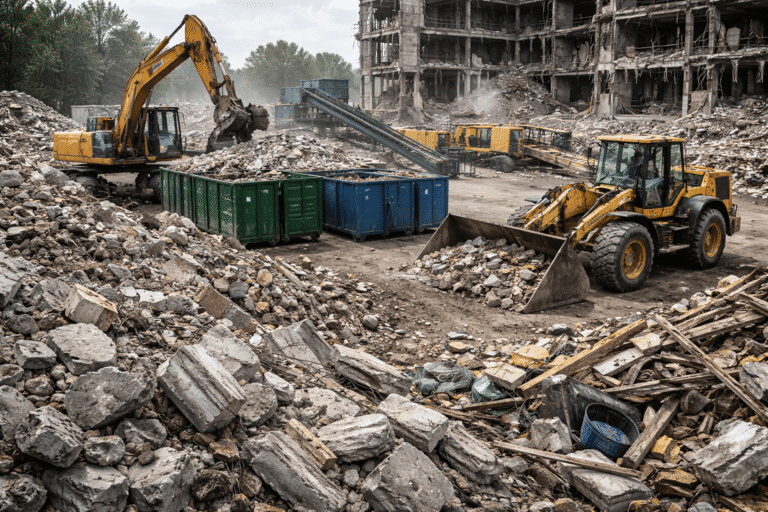
Construction and demolition (C&D) waste is generated throughout every stage of a project, from site preparation to final demolition, making its management a continuous operational requirement. As construction activity increases in scale and complexity, handling this waste becomes more demanding within active project environments.
Although demolition & construction waste management frameworks and guidelines exist, applying them consistently on-site is not always straightforward. Differences in material types, work sequences, and stakeholder involvement influence how waste is managed in practice. Against this backdrop, it becomes important to examine the challenges that arise in managing construction and demolition waste across the project lifecycle. So let’s have a look at them!
C&D Waste Management: Critical Issues SnapshotManaging construction and demolition waste is complicated by mixed waste streams, hazardous material presence, limited recycling infrastructure, and space constraints on active sites. Economic disincentives, weak enforcement of regulations, and low demand for recycled materials further restrict recovery efforts. Operational challenges such as tight project timelines, poor waste data, and insufficient workforce training reduce effective planning. These combined factors contribute to environmental damage, inefficient resource use, and continued reliance on landfilling rather than circular demolition & construction waste management practices. |
What Are The Challenges In Managing Construction And Demolition (C&D) Waste?
Contamination, Segregation, And Hazardous Materials
Construction and demolition waste is generated as a mixed stream of concrete, wood, metals, plastics, and hazardous materials such as asbestos and chemical residues. Poor source segregation causes widespread contamination, making material recovery difficult and unsafe. Hazardous components require specialised identification, handling, and disposal, increasing health risks and processing costs. Although industrial recycling equipment is improving the recovery of materials such as plastic through advanced sorting and cleaning systems, contamination and hazardous substances remain a major barrier to effective construction and demolition waste management.
Inadequate Infrastructure, Logistics, And Space Constraints
Effective construction and demolition waste management depends on the availability of proper collection, sorting, recycling, and processing facilities. In many regions, especially in developing or rapidly urbanising areas, this infrastructure is insufficient or unevenly distributed. Long distances to recycling plants increase transportation costs, while limited space on construction sites, particularly in dense urban environments, restricts on-site segregation. These constraints often push contractors toward landfilling or illegal dumping instead of sustainable practices.
Economic And Market Barriers
In most cases, the cost of managing C&D waste is higher than disposal. Just like in industrial waste management, the cost of sorting, transporting, and processing waste may be high, and recycling plants may charge extra fees. On the other hand, the demand for recycled construction materials in the market is low and cannot compete with the cost of virgin materials. This creates a financial disparity that makes recycling less attractive and contractors less motivated to engage in waste recovery.
Regulatory, Policy, And Enforcement Gaps
Demolition & construction waste management has an existing regulatory framework; however, the effectiveness of these regulations has been undermined by weak enforcement and inconsistent implementation. In many cases, policies lack clear targets, mandatory segregation requirements, or economic incentives for waste & recycling solutions. As a result, industry stakeholders are unsure about how to comply with this regulation. The absence of strong regulations and enforcement mechanisms will continue to hamper compliance and hinder progress towards sustainable waste management practices in the construction and demolition sectors.
Industry Mindset, Awareness, And Training Deficiencies
Construction waste management is heavily influenced by human behaviour on-site. Resistance to change, limited awareness of best practices, and inadequate worker training often result in poor segregation and careless handling of waste. When waste management is not viewed as a priority, even well-designed systems fail in practice. This challenge highlights the importance of education, supervision, and cultural change within the construction industry.
Time, Data, And Planning Limitations
Construction projects are usually driven by tight schedules and cost pressures, leaving little time for careful waste planning and monitoring. In addition, inaccurate estimation of waste quantities and poor characterisation of waste streams make it difficult to design effective management strategies. The lack of reliable, up-to-date data further limits long-term planning, policy development, and performance evaluation, weakening overall construction waste management outcomes.
Environmental And Social Impacts
Inappropriate treatment of C&D waste has led to serious environmental and social effects, such as landfill saturation, air and water pollution, and resource depletion. Social pressure and environmental degradation have added to the importance of upgrading the current practices of construction waste management, but at the same time, they have also emphasised the consequences of the failure of the existing systems.
What Are The Environmental Impacts Of Poor C&D Waste Management?
- Landfill Overuse: Rapid filling of C&D waste can result in a rapid reduction of usable landfill capacity; therefore, the demand for additional landfill sites becomes greater.
- Soil and Water Contamination: Hazardous materials, such as asbestos, lead, paint, and treated wood, migrate into the soil and groundwater; therefore, pollution occurs in surrounding areas.
- Air Pollution/Dust Emissions: Uncontrolled demolition debris/waste can result in high levels of airborne dust, which can affect local air quality.
- Increased Greenhouse Gas Emissions (GHG): Transporting C&D waste to a landfill and decomposing certain types of C&D material generate an increase in emissions to the atmosphere.
- Loss of Recyclable Resources: Poor segregation leads to valuable materials like metals, concrete, and wood being discarded instead of being reused or recycled, even though advanced recycling technologies can efficiently recover and reprocess these materials when proper systems are in place.
- Ecosystem Disruption: Illegal dumping and non-managed disposal of C&D waste disrupts plant and animal habitats, which negatively impacts wildlife and changes local ecosystems.
Conclusion
The challenges of managing construction and demolition waste highlight the need for a more integrated and forward-looking approach. Strengthening planning, policy enforcement, the right equipment, and workforce capability can reduce environmental impacts and support a shift toward sustainable, efficient, and responsible construction practices.
FAQs
What Is Construction And Demolition (C&D) Waste?
Construction and demolition waste is defined as the waste generated during the construction, renovation, repair, and demolition of buildings. This includes concrete, bricks, wood, metals, glass, drywall, and asphalt.
Can recycling C&D waste reduce project costs?
Yes, recycling construction and demolition (C&D) waste helps to reduce project costs. Using recycled concrete, steel, or wood to help complete a project results in reduced disposal costs, less landfill fees, lower transportation fees, and reduced expenses related to purchasing new raw materials.
What equipment helps streamline C&D waste management?
There are various kinds of equipment that have made the recycling of C&D waste more efficient. Some of the most commonly used equipment includes:
- Industrial shredders for mixed debris,
- Screening machines for separating materials,
- Mobile crushers for concrete and asphalt recycling, and
- Magnetic separators for metal recovery.
Conveyors, compactors, transfer stations, transfer trailers, and moving floor systems make the handling, transportation, and reduction of materials more efficient, increasing the rate of processing and reducing costs.
Which kinds of materials in C&D waste are most difficult to recycle?
The most difficult materials to recycle in C&D waste are those that are mixed, contaminated, or chemically treated. These materials include composite materials, insulation with adhesives, painted or treated wood, drywall with moisture or mould contamination, asbestos materials, and mixed plastics.
What Is The Future Of Construction And Demolition Waste Management?
The future of construction and demolition waste management is moving toward circular economy practices, where waste is minimised, and materials are reused, recycled, or repurposed. Greater use of on-site segregation, modern recycling technologies, and digital waste tracking systems will improve efficiency and transparency. Stricter regulations, growing environmental awareness, and the adoption of sustainable construction materials will further reduce landfill dependency and encourage resource-efficient building practices.