How Modern Waste Compactors Help With Transport Challenges
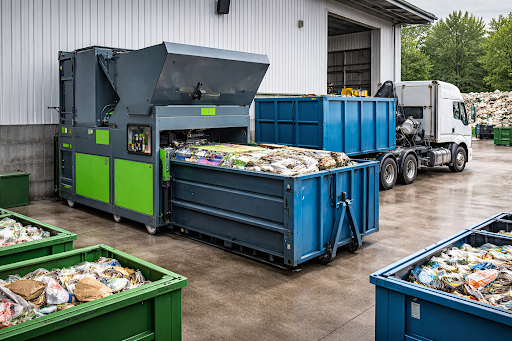
In 2022–23, Australia generated 26.8 million tonnes of building and demolition materials, 14.6 million tonnes of organics, 10.3 million tonnes of ash, 6.5 million tonnes of hazardous waste, 6.0 million tonnes of metals, 4.9 million tonnes of paper and cardboard, and 3.0 million tonnes of plastics (Department of Climate Change, Energy, The Environment and Water). Most of this material is bulky and low-density, meaning trucks often reach volume limits long before they hit their legal weight, driving up fuel use, labour, and collection frequency.
This is where modern waste compactors make a decisive impact. By compressing loose waste into dense, transport-ready loads, they reduce volume by three to six times, or more for certain materials, allowing trucks to carry more per trip. In this blog, we’ll take a closer look at the technology behind them and the ways they are transforming waste transport across Australia, making collection and recycling smarter, faster, and more cost-effective.
Modern Waste Compactors Transport Efficiency OverviewAustralia generates vast volumes of bulky, low-density waste that fills trucks before weight limits, increasing trips, fuel, and costs. Modern compactors compress materials three to six times using hydraulic or mechanical systems, sensors, and automated cycles, creating dense, standardised loads. They maximise payloads, reduce service frequency, streamline handling, cut emissions, and benefit retail, food, industrial, healthcare, and municipal operations, delivering safer, faster, and more cost-effective transport logistics, overall gains efficiency. |
What Are Modern Waste Compactors?
Modern waste compactors are engineered machines that are used for the compression of solid wastes into smaller units. These machines work under the application of either mechanical or hydraulic pressure, which varies from a few tons to more than 100 tons, based on the type of material being compressed. When waste materials are compacted, storage, transportation, or processing of such materials becomes easier.
At the heart of a compactor is a loading chamber and a compression mechanism, typically a hydraulic or mechanical ram. In some of these modern machines, there are sophisticated control features, which include load sensors, cycling systems, and container ejection systems that ensure constant and effective compression. Also, these compactors have capabilities that cater to different types of industrial wastes, including mixed wastes, materials for recycling, and organic materials. Such compactors apply specific and equal pressure on these wastes to produce compacted units or bales.
Choose the right compactor bin to streamline waste handling, maximise space efficiency, and ensure your facility operates more cleanly, safely, and helps reduce waste transport costs. Let’s explore the different types available below.
How Modern Waste Compactors Work?
Loading the Waste
Waste is deposited into the compactor’s chamber, either manually or via automated feeders such as conveyor belts or chutes. Vertical industrial compactors typically load from the top, while horizontal designs allow continuous or bulk feeding.
Initiating Compaction
Once the chamber reaches capacity, the compression mechanism activates. A hydraulic or mechanical ram moves with significant force, pressing the waste against a fixed plate or into a container. Modern systems often use sensors to monitor fill levels and adjust pressure automatically.
Compressing the Waste
The ram continues to apply pressure until the waste reaches the desired density. Uniform force distribution ensures consistent compaction, preventing gaps or loosely packed areas. Some systems allow multiple compression cycles to achieve maximum densification.
Ejecting the Compacted Waste
After compression, the compacted material is pushed or ejected into a detachable container, bin, or baling system. In some designs, bales are tied or secured for easy handling and transport.
Reset and Repeat
Once ejection is complete, the chamber is cleared, and the system resets for the next cycle. Automated systems can continuously monitor operations, ensuring optimal efficiency and safety.

Ways Modern Compactors Reduce Waste Transportation Challenges
Advanced recycling technologies are transforming industrial waste disposal. And modern compactors are no exception. Let’s see how they tackle the transposition challenges: –
True Payload Maximisation
Heavy vehicles are regulated by both volume and gross weight limits. In traditional collection, trucks frequently reach volume constraints long before weight capacity, leading to under‑utilised payloads. By densifying waste, compactors enable transport vehicles to operate closer to their maximum legal payload weight, improving fleet productivity while staying within safety and compliance thresholds.
Integrated Load Management and Automation
Advanced compactors include load sensors, programmable logic controllers (PLC), and automatic cycle control systems. These systems detect fill levels and initiate compression cycles only when optimal fill thresholds are reached. The result is predictable, uniform loads rather than variable-density waste, which smooths scheduling and reduces idle time during docking, loading, and unloading operations.
Container Standardisation
Many modern compactors interface with ISO‑standard containers or detachable bins, allowing waste to be compacted directly into transport‑ready units. This eliminates the need for intermediate handling and reduces vehicle turnaround time, a critical factor in logistics optimisation.
Reduced Service Frequency and Route Density
By shrinking the effective volume of waste at source, compactors reduce the number of scheduled collection events, lowering waste transport costs, total distance travelled per tonne of waste. Fewer trips translate into reduced fuel consumption, driver hours, maintenance wear, and carbon emissions, all measurable transport efficiencies.
Industries That Benefit Most from Compactors
Retail and Wholesale Distribution
Retail environments generate large amounts of cardboard, packaging materials, and plastics. Frequent deliveries and product turnover create constant streams of low-density refuse. Compacting these materials reduces storage space requirements, consolidates collection loads, and enables predictable transport planning along with reduced waste transport costs owing to minimised vehicle trips and operational bottlenecks.
Food and Hospitality Sectors
Restaurants, hotels, and food processing plants produce waste streams with a high proportion of organics and food scraps, often with significant moisture content. Waste compactors with wet‑waste handling capabilities and hydraulic compression systems densify this material, controlling odours, minimising container overflow while preparing the waste for transport or anaerobic processing.
Manufacturing and Industrial Facilities
Factories and production facilities produce mixed trash, packaging scraps, plastics, and scrap materials. In these settings, compactors often have high-tonnage hydraulic rams that can turn bulk materials into dense loads. This makes it easier to move things around inside and makes it safer and more efficient to transport them to recycling or disposal facilities.
Healthcare and Laboratory Environments
Hospitals and laboratories generate regulated and hazardous waste streams, including plastics, sharps, and packaging. Specialised compactors designed for sealed compression and automated ejection reduce exposure risk, maintain containment integrity, and prepare waste for compliant transportation.
Municipal and Large-scale Facilities
Urban service centres, universities, and airports handle high-volume, variable-density waste streams. Stationary compactors with integrated monitoring systems allow operators to optimally densify multiple streams simultaneously, reducing transport frequency and improving route efficiency across large service areas.
Conclusion
In an environment shaped by rising waste volumes, long haul distances, and tightening sustainability targets, modern waste compactors are no longer peripheral equipment; they are a core component of efficient, future-ready waste logistics.
That’s exactly the reality OGTEC engineers for. As a leader in waste recycling solutions, our stationary compactors are built for Australian transfer stations, handling up to 480 m³ per hour with all feed systems. High-tensile construction, large clear openings, and extended blade penetration maximise payloads, reduce spillage, and lower freight cost per tonne.
Talk to OGTEC today and transform waste movement into a high-performance logistics advantage.
FAQs
What type of compactor is best for reducing transport challenges?
Stationary and horizontal compactors are most effective, as they deliver high compaction ratios, continuous loading capability, and direct container integration—allowing waste to be densified at source and transported in payload-optimised loads with minimal handling.
Do compactors help lower my business’s carbon footprint?
Yes. By reducing waste volume, compactors cut collection frequency and transport distance per tonne. Fewer truck movements mean lower fuel consumption, reduced vehicle emissions, and a measurable decrease in the carbon footprint associated with waste logistics.
Can compactors handle bulky items that normally delay transportation?
Modern compactors are engineered for irregular and bulky materials such as cardboard, packaging, and mixed refuse. High-force hydraulic rams break down large items, eliminate voids, and convert difficult waste into dense, transport-ready loads.